Photo: Modjaji Books
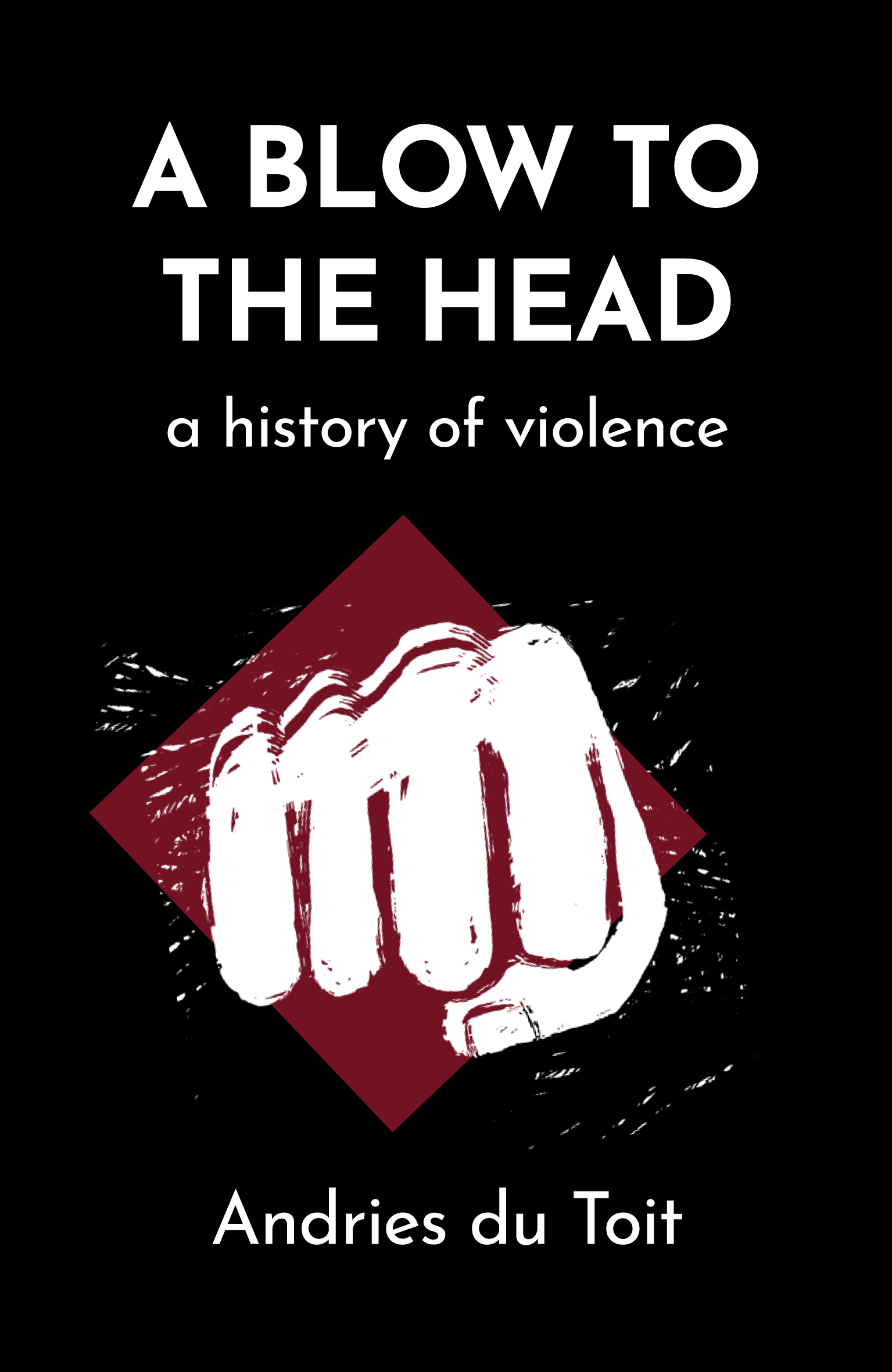 Photo: Modjaji Books
Cape Town's famous Book Lounge hosted an evening in early November that proved to be more than just another book launch. Professor Andries du Toit, presenting "A Blow to the Head" (published by Handmade Books, an imprint of Modjaji), offered an intimate exploration of violence, privilege, and the complex landscape of post-apartheid South Africa.
Photo: Modjaji Books
Cape Town's famous Book Lounge hosted an evening in early November that proved to be more than just another book launch. Professor Andries du Toit, presenting "A Blow to the Head" (published by Handmade Books, an imprint of Modjaji), offered an intimate exploration of violence, privilege, and the complex landscape of post-apartheid South Africa.
The event, featuring a conversation with Professor Kopano Ratele, whose scholarship focuses on critical men and masculinity studies alongside critical and cultural African psychological studies, delved deep into the heart of what it means to navigate contemporary South African society as a white man grappling with historical complicity and present-day responsibility.
Prof Du Toit's memoir, around two pivotal encounters, begins with a dark and threatening incident at a gym in Green Point. This volatile situation, followed by a violent confrontation in a shopping centre parking lot on Kloof Street and its aftermath, becomes the foundation for a deeper exploration of South Africa's underlying tensions.
The author, currently a Professor at the School of Government at the University of Western Cape and former director of the Institute for Poverty, Land and Agrarian Studies (PLAAS), brought his academic expertise in power relations and social justice to bear on deeply personal experiences. His academic background, including a PhD from the University of Essex under Ernesto Laclau's supervision, provides a theoretical framework that enriches his personal narrative.
One of the most striking aspects of the evening was Prof Du Toit's reading of his encounter with unexpected violence.
"Being punched in the face in a shopping mall parking lot by a total stranger with no warning is a different proposition entirely," he writes. "It's not an experience you can easily describe, because a key part of the experience is that reality itself has suddenly been subject to a hole or glitch." His vivid description captures not just the physical assault but the disorienting nature of such violence, describing how "you're not in the story you thought you were in, or you're not the one shaping this story anyway”.
During the discussion, Prof du Toit shared a powerful childhood memory from his grandfather's smallholding near Cradock in 1974. In the book, he describes witnessing his grandfather berating farm workers on a frosty morning.
"A group of black men standing sullenly in their threadbare clothes in the winter cold: mute, their breath forming a silent cloud above their heads, their eyes fixed on the ground, while he talks and talks and talks and talks and talks." This scene, he explains, became "a moment from which I date a certain awareness, a sense of experiencing the world as being in the process of splitting apart”.
The evening focused significantly on what du Toit terms "the politics of confrontation”. He reflected on how the events of 2016 seemed to mark a period when nuance seemed absent from public discourse, as the rainbow nation's veneer cracked.
"Words can do many things," he writes in a particularly poignant passage. "They can create connections; they can enforce boundaries. They can heal, and they can hurt. They can bring understanding, or they can occlude, lie, and hide."
Particularly influential in shaping this perspective was his interactions during his PhD studies with fellow PhD student, Barnor Hesse, today an Associate Professor of Black Studies, Political Science, and Sociology at Northwestern University in the United States, whose challenge about confronting white privilege in everyday situations became a central theme in du Toit's approach to social engagement. The discussion highlighted how such theoretical frameworks from black political thought inform practical responses to everyday racism.
Perhaps the most moving aspect of the evening was the discussion of repair and love in the context of social justice. Prof Du Toit, drawing on Thomas Cousins' concept of repair, emphasised that acknowledgement of "unerasable hurt" is essential to moving forward.
"What I am writing about is an experience of trauma," he reflects in the book. "About societal and personal trauma: one tiny moment in the ongoing violence, structural and physical, that is part of South Africa's reality, and about how it persists."
Throughout the evening, Prof du Toit emphasised how writing became a method of discovery rather than mere documentation. The pieces that would become this book sat on his computer for years, not from reluctance to share but from fear of appearing self-righteous. This admission highlighted the challenge of writing about privilege and violence while maintaining both honesty and humility. As he wrote, he found himself "trying to be part of the making of a community that does not yet exist, but upon which, for me at least, any meaningful way of belonging to this country depends”.
The launch demonstrated how personal narratives can illuminate broader societal issues. Prof Du Toit's work offers no easy answers but instead provides a thoughtful framework for engaging with South Africa's complex social landscape. His exploration of violence, masculinity, and racial dynamics, grounded in both academic rigour and personal vulnerability, suggests that the path forward requires both unflinching honesty about the past and a commitment to ongoing dialogue.
Photo: Modjaji BooksThe event, featuring a conversation with Professor Kopano Ratele, whose scholarship focuses on critical men and masculinity studies alongside critical and cultural African psychological studies, delved deep into the heart of what it means to navigate contemporary South African society as a white man grappling with historical complicity and present-day responsibility.
Prof Du Toit's memoir, around two pivotal encounters, begins with a dark and threatening incident at a gym in Green Point. This volatile situation, followed by a violent confrontation in a shopping centre parking lot on Kloof Street and its aftermath, becomes the foundation for a deeper exploration of South Africa's underlying tensions.
The author, currently a Professor at the School of Government at the University of Western Cape and former director of the Institute for Poverty, Land and Agrarian Studies (PLAAS), brought his academic expertise in power relations and social justice to bear on deeply personal experiences. His academic background, including a PhD from the University of Essex under Ernesto Laclau's supervision, provides a theoretical framework that enriches his personal narrative.
One of the most striking aspects of the evening was Prof Du Toit's reading of his encounter with unexpected violence.
"Being punched in the face in a shopping mall parking lot by a total stranger with no warning is a different proposition entirely," he writes. "It's not an experience you can easily describe, because a key part of the experience is that reality itself has suddenly been subject to a hole or glitch." His vivid description captures not just the physical assault but the disorienting nature of such violence, describing how "you're not in the story you thought you were in, or you're not the one shaping this story anyway”.
During the discussion, Prof du Toit shared a powerful childhood memory from his grandfather's smallholding near Cradock in 1974. In the book, he describes witnessing his grandfather berating farm workers on a frosty morning.
"A group of black men standing sullenly in their threadbare clothes in the winter cold: mute, their breath forming a silent cloud above their heads, their eyes fixed on the ground, while he talks and talks and talks and talks and talks." This scene, he explains, became "a moment from which I date a certain awareness, a sense of experiencing the world as being in the process of splitting apart”.
The evening focused significantly on what du Toit terms "the politics of confrontation”. He reflected on how the events of 2016 seemed to mark a period when nuance seemed absent from public discourse, as the rainbow nation's veneer cracked.
"Words can do many things," he writes in a particularly poignant passage. "They can create connections; they can enforce boundaries. They can heal, and they can hurt. They can bring understanding, or they can occlude, lie, and hide."
Particularly influential in shaping this perspective was his interactions during his PhD studies with fellow PhD student, Barnor Hesse, today an Associate Professor of Black Studies, Political Science, and Sociology at Northwestern University in the United States, whose challenge about confronting white privilege in everyday situations became a central theme in du Toit's approach to social engagement. The discussion highlighted how such theoretical frameworks from black political thought inform practical responses to everyday racism.
Perhaps the most moving aspect of the evening was the discussion of repair and love in the context of social justice. Prof Du Toit, drawing on Thomas Cousins' concept of repair, emphasised that acknowledgement of "unerasable hurt" is essential to moving forward.
"What I am writing about is an experience of trauma," he reflects in the book. "About societal and personal trauma: one tiny moment in the ongoing violence, structural and physical, that is part of South Africa's reality, and about how it persists."
Throughout the evening, Prof du Toit emphasised how writing became a method of discovery rather than mere documentation. The pieces that would become this book sat on his computer for years, not from reluctance to share but from fear of appearing self-righteous. This admission highlighted the challenge of writing about privilege and violence while maintaining both honesty and humility. As he wrote, he found himself "trying to be part of the making of a community that does not yet exist, but upon which, for me at least, any meaningful way of belonging to this country depends”.
The launch demonstrated how personal narratives can illuminate broader societal issues. Prof Du Toit's work offers no easy answers but instead provides a thoughtful framework for engaging with South Africa's complex social landscape. His exploration of violence, masculinity, and racial dynamics, grounded in both academic rigour and personal vulnerability, suggests that the path forward requires both unflinching honesty about the past and a commitment to ongoing dialogue.