On a quiet evening in late September, a celestial visitor made its way into Earth's orbit—a tiny asteroid named 2024 PT5.
For the next 57 days, this small space rock will circle the planet like a temporary companion, earning it the title of a mini-moon.
 Scientists were buzzing with excitement, and among them was Prof Lerothodi Leeuw, an expert in physics and astronomy from the University of the Western Cape (UWC).
"This mini-moon came from the asteroid belt," Prof Leeuw explained in an interview on SABC, "a region further out in our solar system where countless small rocky bodies orbit the Sun."
It’s not every day that Earth captures one of these asteroids, and having such a visitor is a thrilling event for astronomers.
"In a way, it's like meeting a distant relative from the early days of our solar system's formation."
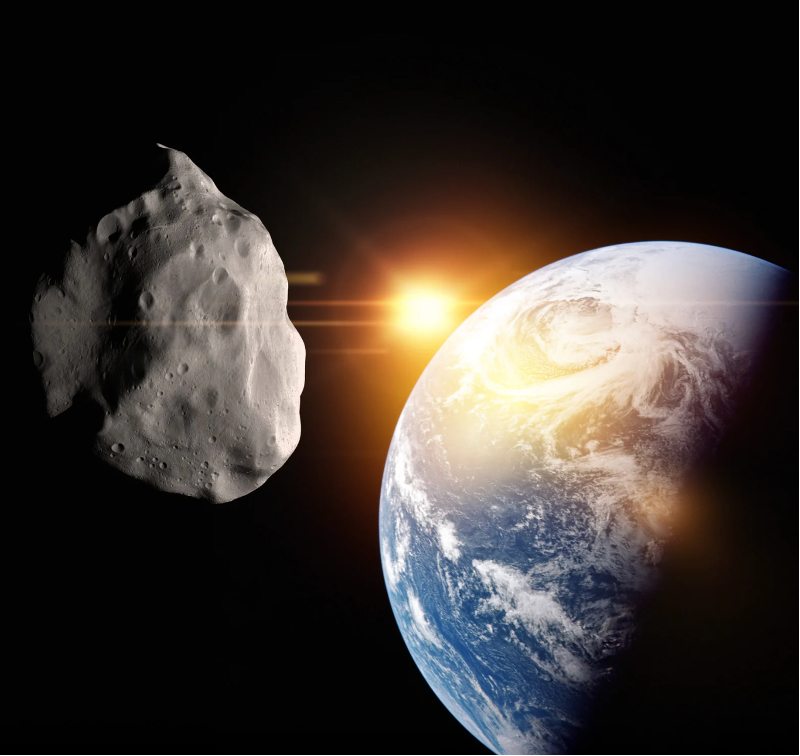 At just 10 metres in diameter and about 3 000 times smaller than the moon, the cosmic traveller is but a speck by comparison.
It is currently orbiting Earth at a distance of about 3 million kilometres – far beyond reach. Too small and distant to be seen with the naked eye, 2024 PT5 silently circles Earth, following an unusual trajectory that has fascinated scientists.
"This is exciting not just because it’s a rare occurrence," said Professor Leeuw, "but because near-Earth asteroids like these are closely monitored. We always want to know if they pose any risk of colliding with Earth. But in this case, Earth has captured it safely in orbit—giving us a unique opportunity for study."
The “mini-moon” will remain until November, when it will continue its journey through space. Prof Leeuw anticipates that it will return in about 10 years and could come even closer to Earth.
For the next 57 days, this small space rock will circle the planet like a temporary companion, earning it the title of a mini-moon.
"This mini-moon came from the asteroid belt," Prof Leeuw explained in an interview on SABC, "a region further out in our solar system where countless small rocky bodies orbit the Sun."
It’s not every day that Earth captures one of these asteroids, and having such a visitor is a thrilling event for astronomers.
"In a way, it's like meeting a distant relative from the early days of our solar system's formation."
It is currently orbiting Earth at a distance of about 3 million kilometres – far beyond reach. Too small and distant to be seen with the naked eye, 2024 PT5 silently circles Earth, following an unusual trajectory that has fascinated scientists.
"This is exciting not just because it’s a rare occurrence," said Professor Leeuw, "but because near-Earth asteroids like these are closely monitored. We always want to know if they pose any risk of colliding with Earth. But in this case, Earth has captured it safely in orbit—giving us a unique opportunity for study."
The “mini-moon” will remain until November, when it will continue its journey through space. Prof Leeuw anticipates that it will return in about 10 years and could come even closer to Earth.