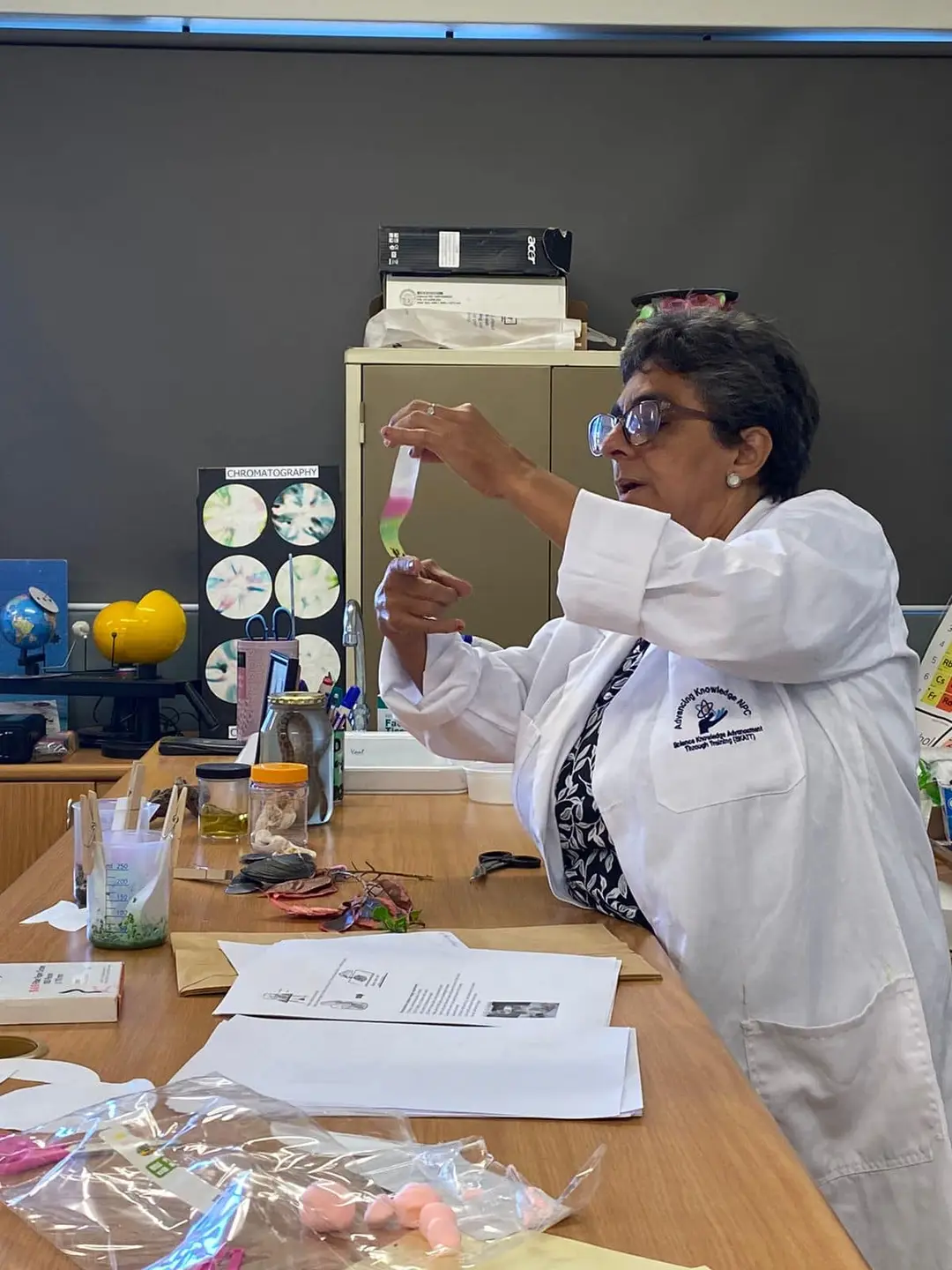
For this reason, University of the Western Cape (UWC) lecturer Dawn Faroe is dedicated to science advancement and equipping teachers with the necessary tools and knowledge to foster a deeper understanding of the subjects among learners.
Since 2017, Faroe, from the Department of Biodiversity and Conservation Biology, has been visiting schools in the Western, Eastern and Northern Cape provinces through Advancing Knowledge, a non-profit company, to facilitate teacher training programmes.
"It's about science advancement. We promote the science curriculum, and my focus in the training is life and living."
The short course is called Inquiry-Based Science Education (IBSE01) and is endorsed by the South African Council for Educators. Attending teachers gain professional development points which are useful when applying for new or promotion posts.
Teachers receive hands-on training from experienced facilitators using mostly everyday resource materials.
They develop teaching aids in natural science to perform simple experiments that can easily be transferred to their daily natural science classes.
During the training sessions, teachers participate in science. From designing habitats to guiding food chains to microscopy and chromatography on leaves, they are engaged in hands-on inquiry-based practical work, eliciting critical questions and providing creative solutions.
While Faroe's speciality is in life and living, they also train educators in other fields such as chemistry, physics, and astronomy.
"The main emphasis is to show teachers that even if your school is not equipped, you can do these experiments by just going a bit out of your way and getting things together to train your kids".
According to Faroe, these sessions are designed to empower teachers, many of whom need more formal training in science.
"Many teachers are asked to teach science without a science background. They often shy away from difficult concepts, which affects the quality of science education."
The initiative also aims to tackle the need for more equipment in schools.
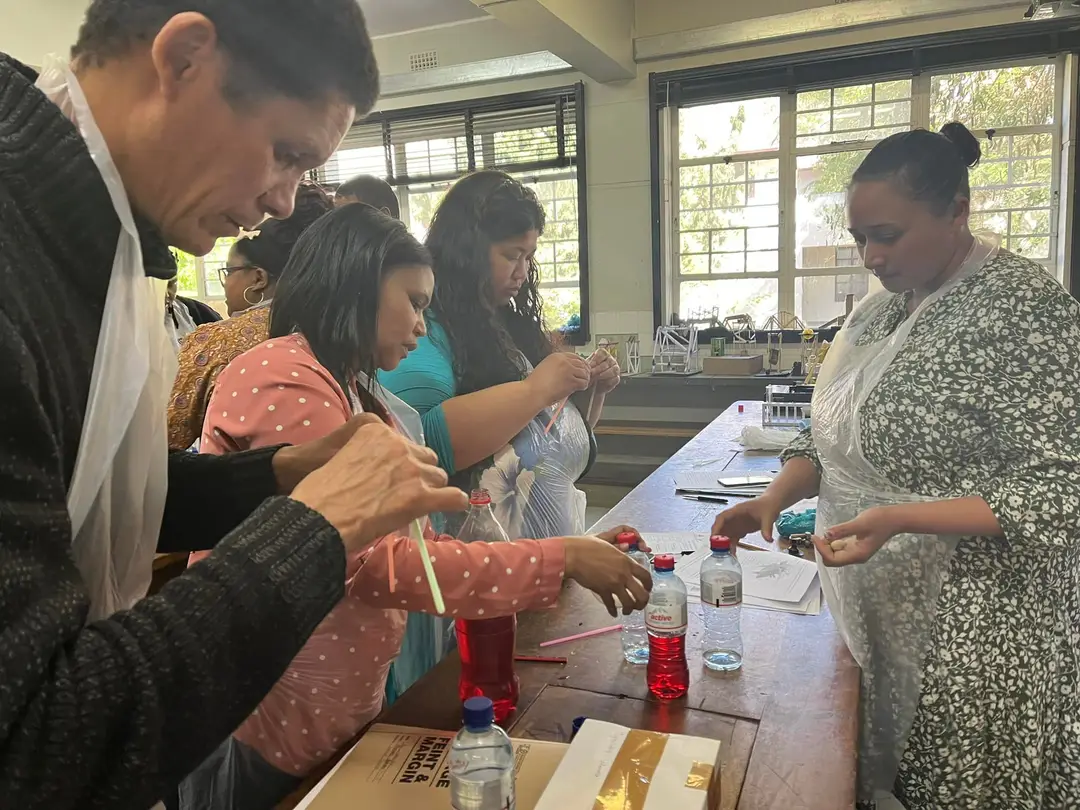
"Even if your school is not equipped, you can still teach science effectively. The reality in many of our schools is that there is a huge lack in the field of science, and being a lecturer in the science faculty, I deal with the result of that lack of training at our schools."
The impact of these training sessions has been profound, she said. "In our recent training in Butterworth, we had 28 teachers from the surrounding areas.
They were initially cautious about engaging in the activity, but in the end, they were more confident and enthusiastic," Faroe recounted.
The success of these sessions has led to the establishment of science labs in several schools. "Just recently, three science labs were opened in different schools in the Cape."
Faroe believes it is in her blood to help.
"I think I have a servant's heart and a proactive nature. I'm willing to uplift, help, and motivate. That's how I got involved," she said.
Their work targets schools based on invitations and the willingness of principals to engage.