Photographer: Gaëtan Othenin-Girard on Unsplash
The University of the Western Cape (UWC) is playing a crucial role in driving South Africa’s progress in space science and astronomy.
Through its Department of Physics & Astronomy, UWC is producing well-rounded graduates who are equipped not only with skills in astronomy but also in big data, and analytical and problem-solving techniques, preparing them for a variety of industries.
Interest in astronomy in South Africa has grown significantly due to major scientific projects like the MeerKAT radio telescope and the Square Kilometre Array (SKA).
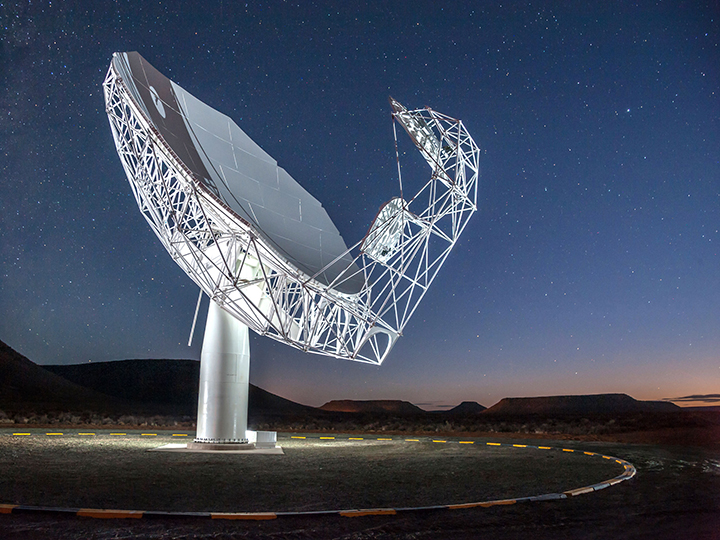 MeerKAT’s 64 observational dishes are designed to detect and analyse radio waves from various cosmic sources, aiding our understanding of the universe.
These dishes serve as a precursor to the SKA, which is set to become the world’s most powerful radio telescope upon completion around 2028.
“Projects like MeerKAT and SKA have placed South Africa on the global scientific map,” said Ed Elson, Associate Professor of Astrophysics at UWC.
“They have attracted international experts and facilitated groundbreaking research, allowing South Africa to collaborate with global leaders in astronomy.”
UWC’s Department of Physics & Astronomy focuses not only on advanced astronomical research but also on cultivating a diverse student base.
"We aim to provide opportunities for students from marginalised backgrounds to pursue careers in science," Elson said.
The South African Radio Astronomy Observatory (SARAO) has been a long-standing partner, providing support to UWC in the development of future astronomers.
In addition to research, UWC emphasises academic and presentation skills, ensuring that students can conduct and present impactful scientific research.
The institution is particularly proud of its role in shaping ethical and socially responsible researchers.
Elson added, "Our aim is to dispel the myth that astronomy is only for the exceptionally gifted. With the right support, anyone with a passion for science can excel."
The scientific initiatives MeerKAT and SKA have had a profound impact not only on South African astronomy but also on the global scientific community.
MeerKAT’s sensitivity and resolution allow for detailed studies of the universe, and it is already making significant contributions to international science.
Landmark projects such as MeerKAT and the Southern African Large Telescope (SALT) have revolutionised the field.
SALT, located near Sutherland in the Northern Cape, is one of the largest single optical telescopes in the Southern Hemisphere.
These projects have created viable career paths for professional astronomers in South Africa, offering numerous opportunities for local graduates to contribute to space science.
 Emeritus Professor Ramesh Bharuthram from UWC’s Department of Physics & Astronomy highlights how space science research at UWC has grown over the past decade.
Starting with just one astronomer in 2008, UWC now has one of the strongest astronomy teams in Africa.
Collaborations with international experts and institutions like Oxford University have enhanced the research capabilities of UWC’s students and staff.
UWC’s space science research focuses on Near-Earth Space Physics and Astronomy and Astrophysics.
The former studies phenomena within our solar system, relevant to understanding space weather, while the latter delves into deep space, discovering new galaxies and studying their dynamics.
The research conducted at UWC is of high international standing, with collaborations with South African National Space Agency (SANSA), SARAO and global partners.
“The quality of research at UWC is of the highest standard,” Prof Bharuthram emphasised. “We publish in journals of high international standing.”
He stressed the importance of problem solving skills, critical thinking, versatility, and adaptability, which are crucial in any discipline, to produce the quality of graduates needed in the world of work.
South Africa’s progress in space science has also opened doors for graduates in other sectors. Many of UWC’s doctoral students go on to post-doctoral positions at prestigious global institutions, including NASA.
The University is committed to attracting international talent to work on African scientific projects, as the SKA continues to develop.
This is an edited version of an article first published in Wesgro PIONEERS Magazine, 7th Edition, 2024.
The University of the Western Cape (UWC) is playing a crucial role in driving South Africa’s progress in space science and astronomy.
Through its Department of Physics & Astronomy, UWC is producing well-rounded graduates who are equipped not only with skills in astronomy but also in big data, and analytical and problem-solving techniques, preparing them for a variety of industries.
Interest in astronomy in South Africa has grown significantly due to major scientific projects like the MeerKAT radio telescope and the Square Kilometre Array (SKA).
These dishes serve as a precursor to the SKA, which is set to become the world’s most powerful radio telescope upon completion around 2028.
“Projects like MeerKAT and SKA have placed South Africa on the global scientific map,” said Ed Elson, Associate Professor of Astrophysics at UWC.
“They have attracted international experts and facilitated groundbreaking research, allowing South Africa to collaborate with global leaders in astronomy.”
UWC’s Department of Physics & Astronomy focuses not only on advanced astronomical research but also on cultivating a diverse student base.
"We aim to provide opportunities for students from marginalised backgrounds to pursue careers in science," Elson said.
The South African Radio Astronomy Observatory (SARAO) has been a long-standing partner, providing support to UWC in the development of future astronomers.
In addition to research, UWC emphasises academic and presentation skills, ensuring that students can conduct and present impactful scientific research.
The institution is particularly proud of its role in shaping ethical and socially responsible researchers.
Elson added, "Our aim is to dispel the myth that astronomy is only for the exceptionally gifted. With the right support, anyone with a passion for science can excel."
The scientific initiatives MeerKAT and SKA have had a profound impact not only on South African astronomy but also on the global scientific community.
MeerKAT’s sensitivity and resolution allow for detailed studies of the universe, and it is already making significant contributions to international science.
Landmark projects such as MeerKAT and the Southern African Large Telescope (SALT) have revolutionised the field.
SALT, located near Sutherland in the Northern Cape, is one of the largest single optical telescopes in the Southern Hemisphere.
These projects have created viable career paths for professional astronomers in South Africa, offering numerous opportunities for local graduates to contribute to space science.
Starting with just one astronomer in 2008, UWC now has one of the strongest astronomy teams in Africa.
Collaborations with international experts and institutions like Oxford University have enhanced the research capabilities of UWC’s students and staff.
UWC’s space science research focuses on Near-Earth Space Physics and Astronomy and Astrophysics.
The former studies phenomena within our solar system, relevant to understanding space weather, while the latter delves into deep space, discovering new galaxies and studying their dynamics.
The research conducted at UWC is of high international standing, with collaborations with South African National Space Agency (SANSA), SARAO and global partners.
“The quality of research at UWC is of the highest standard,” Prof Bharuthram emphasised. “We publish in journals of high international standing.”
He stressed the importance of problem solving skills, critical thinking, versatility, and adaptability, which are crucial in any discipline, to produce the quality of graduates needed in the world of work.
South Africa’s progress in space science has also opened doors for graduates in other sectors. Many of UWC’s doctoral students go on to post-doctoral positions at prestigious global institutions, including NASA.
The University is committed to attracting international talent to work on African scientific projects, as the SKA continues to develop.
This is an edited version of an article first published in Wesgro PIONEERS Magazine, 7th Edition, 2024.