The ship has not only been offering free humanitarian and medical services to Capetonians, but its presence has also been a valuable resource for university students studying Chinese Medicine and Acupuncture.
The ship has more than 400 people on board. The floating hospital features 300 beds, 20 ICU beds, eight operating theatres, 17 clinical departments and five auxiliary diagnostic departments, It even boasts an onboard medical rescue helicopter.
The ship is also equipped with a remote networking and communications system to allow teleconferencing with doctors and specialists on land, and it was expected to treat 600 to 700 patients daily until 29 August but the number swelled to 3 700 daily due to the high demand.
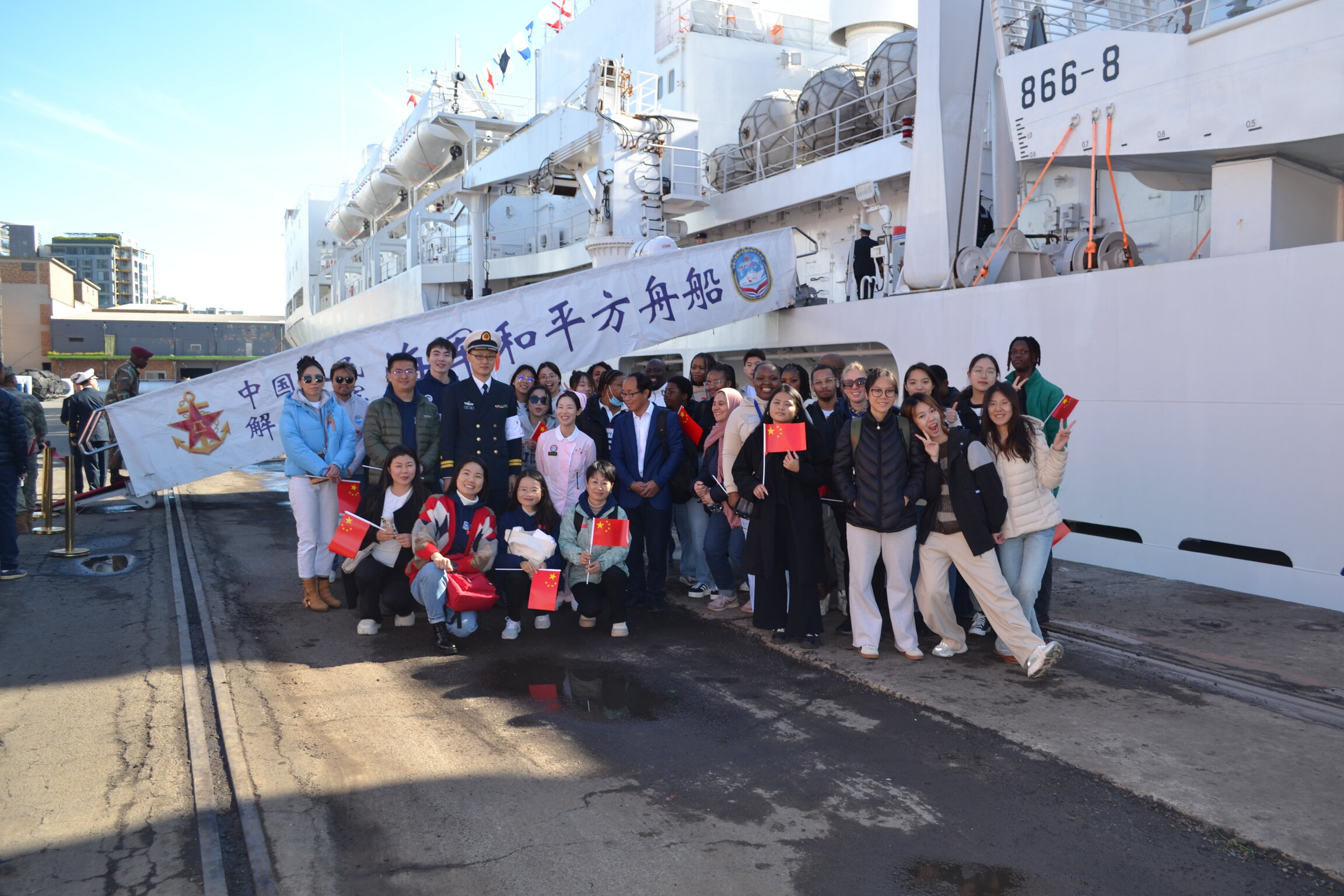
UWC Director of the International Relations Office Umesh Bawa welcomed the Chinese naval crew, who he described as “warriors of peace”, aboard the “Ship of Life” for a mission called “ Mission Harmony”.
“We appreciate a long-standing partnership that South Africa has had with our colleagues, right from the time when they were in solidarity in supporting us in our fight against apartheid, but now more strongly, in bringing together ways in which we can build friendships across the continent,” said Bawa.
“I think the significance of this is we were able to, during this time in the world when we had serious challenges, such as the genocide in Palestine, the war in Ukraine, and difficulties in Sudan … this is the time, more than ever, that we focus on building bridges and working together for peace.”
UWC students studying Chinese Medicine were volunteering their services during the ship's stay on the South African shores. One of them was Siyamthanda Nyumbeka, who was in her final year of Chinese Medicine and Acupuncture.
She described it as a “humbling experience” and was honoured to be part of the operation.
“I got to see how traditional Chinese medicine can be integrated with conventional medicine departments in a hospital setup. More than anything, this experience taught me that there is space for us in the South African medical field, and we are a useful resource,” she said.
Nyumbeka said a number of patients have been coming to try out traditional Chinese medicine with very little knowledge of it and were fascinated by how it works and its healing methods.
“This operation was exceptionally motivating; it was precisely the last push I needed to get through my final year. I learned more skills to brush up on my consultations, which was fun for me. Furthermore, this was a learning-teaching experience for both the Chinese and South African delegates and us students and volunteers,” she said.
“As a traditional Chinese medicine student, I feel hopeful and excited about what's ahead of me. Our career options are numerous, and this operation helped me and my colleagues know that there is space for traditional Chinese medicine doctors in this country, whether in the military system or in private or public healthcare. This experience has opened doors for us.”