Partnerships play a pivotal role in capacitating the higher education sector to actively contribute towards achieving the Sustainable Development Goals (SDGs).
The EngageSDG project, funded by the European Commission through the Erasmus Plus Programme, exemplifies the transformative potential of collaborative initiatives in this regard.
From 18 to 20 March 2024, the University of the Western Cape (UWC) hosted 13 partners for EngageSDG, which is funded by the European Commission through the Erasmus Plus Programme.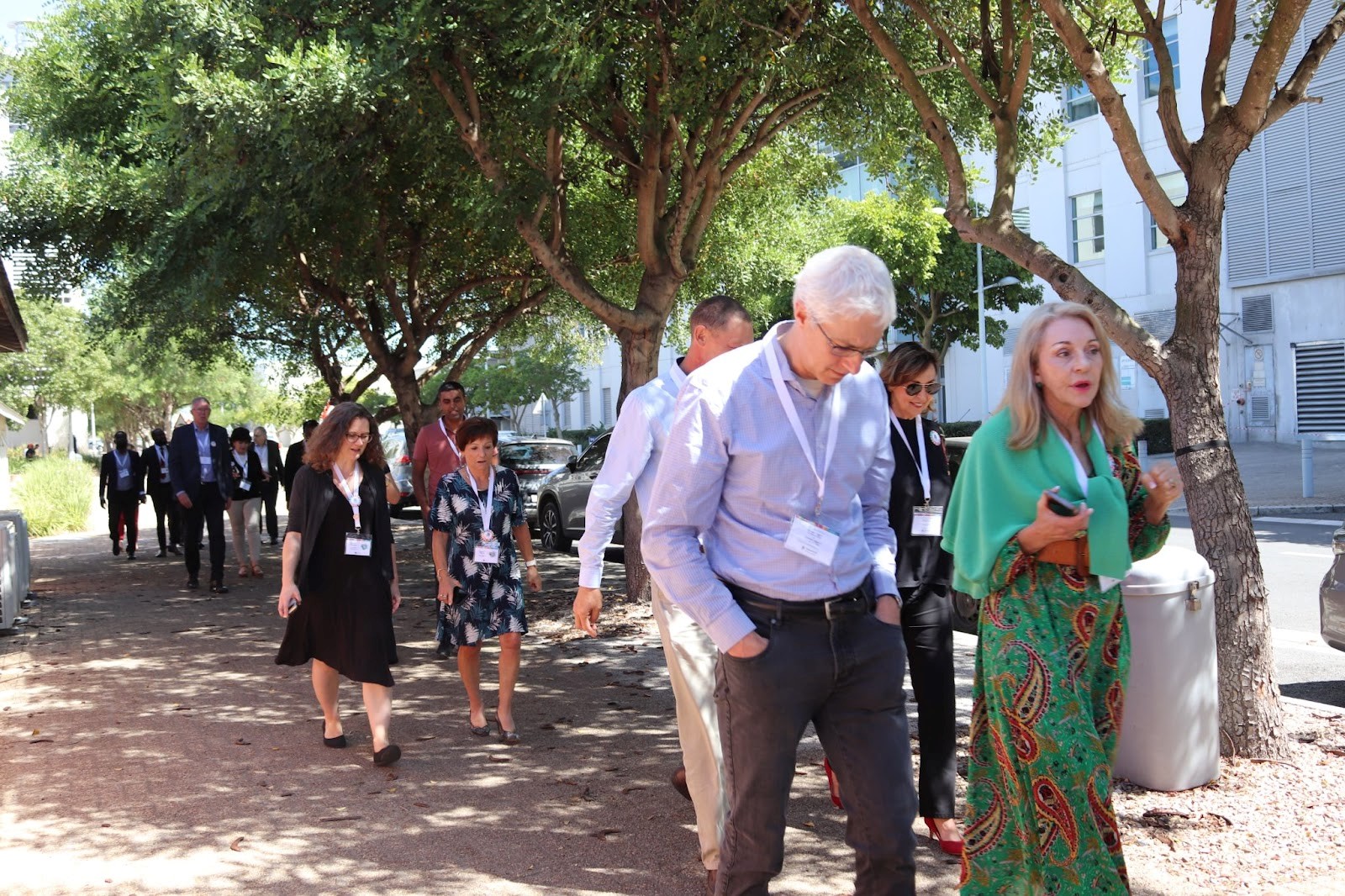 Delegates at the three-day EngageSDG Consortium
The project aims to enhance the capacity of SADC universities to actively contribute to the realisation of the SDGs in their local contexts through participatory approaches (PAs).
One of the key goals of the University of the Western Cape (UWC) is to foster partnerships.
Professor Jose Frantz, Deputy Vice-Chancellor for Research and Innovation at UWC, believes that collaboration is imperative for higher education institutions to collectively contribute to a more sustainable and equitable future.
She said, "As we navigate the complex challenges facing our world, it's clear that no single entity can address them alone. Through our collective efforts, we have the opportunity to harness diverse perspectives, expertise, and resources to make meaningful progress towards the SDGs".
One of the key strengths of this partnership lies in its ability to harness the collective expertise and perspectives of its members. As Ms. Elizabeth Colucci, Director of International Projects from OBREAL, highlighted, "This project is the fruits of labour of many. Very few projects are tackling SDGs from such a distinct static and southern African perspective like this project will, in collaboration of course, with a very dynamic group of European institutions who will be bringing their experiences, their knowledge, their institutional capacities but also their openness to learn and partner with the institutions in Africa."
Collaborations between universities, research institutions, and relevant stakeholders facilitate the exchange of best practices, knowledge, and technology, ultimately enhancing the effectiveness of educational programs and research endeavors aimed at sustainable development. These initiatives create a synergistic environment for addressing complex global challenges.
Moreover, partnerships facilitate the integration of diverse viewpoints and experiences, which is crucial for developing contextually relevant and sustainable solutions. The EngageSDG project recognizes the importance of incorporating local knowledge and engaging with communities, ensuring that the proposed solutions resonate with the unique socio-economic, cultural, and environmental landscapes of the regions they serve.
As Professor Martin Oosthuizen, Executive Director of the Southern African Regional Universities Association (SARUA), believes, "This project is extremely exciting, and I think that hopefully, we can learn together about how we can draw our local communities in as partners in developing knowledge that makes a meaningful impact on the quality of their lives."
Shared expertise and resources enable the development of innovative solutions, ensuring a comprehensive approach to achieving SDGs.
Collaborations also amplify the impact of EU-funded projects as they often involve diverse perspectives from across member states.
The societal engagement is a core responsibility of higher education systems, and EngageSDG intends to support partner institutions as well as other institutions within the SADC region to implement reforms that will allow them to be more inclusive, fully-fledged constituents of civil society, by putting their knowledge and resources at the service of their local, national, and regional communities.
The project aims to enhance local impacts in South African, Zambian, and Mauritian HE institutions by integrating sustainability-related knowledge into outreach strategies, teaching, learning, and research aligned with the SDGs.
It promotes active citizenship through partnerships between HE institutions and their communities to address societal challenges and change attitudes and values in the SADC HE sectors.
These partnerships may lead to potential changes in organizational structures within partner and other HE institutions, as well as multi-sectoral networks.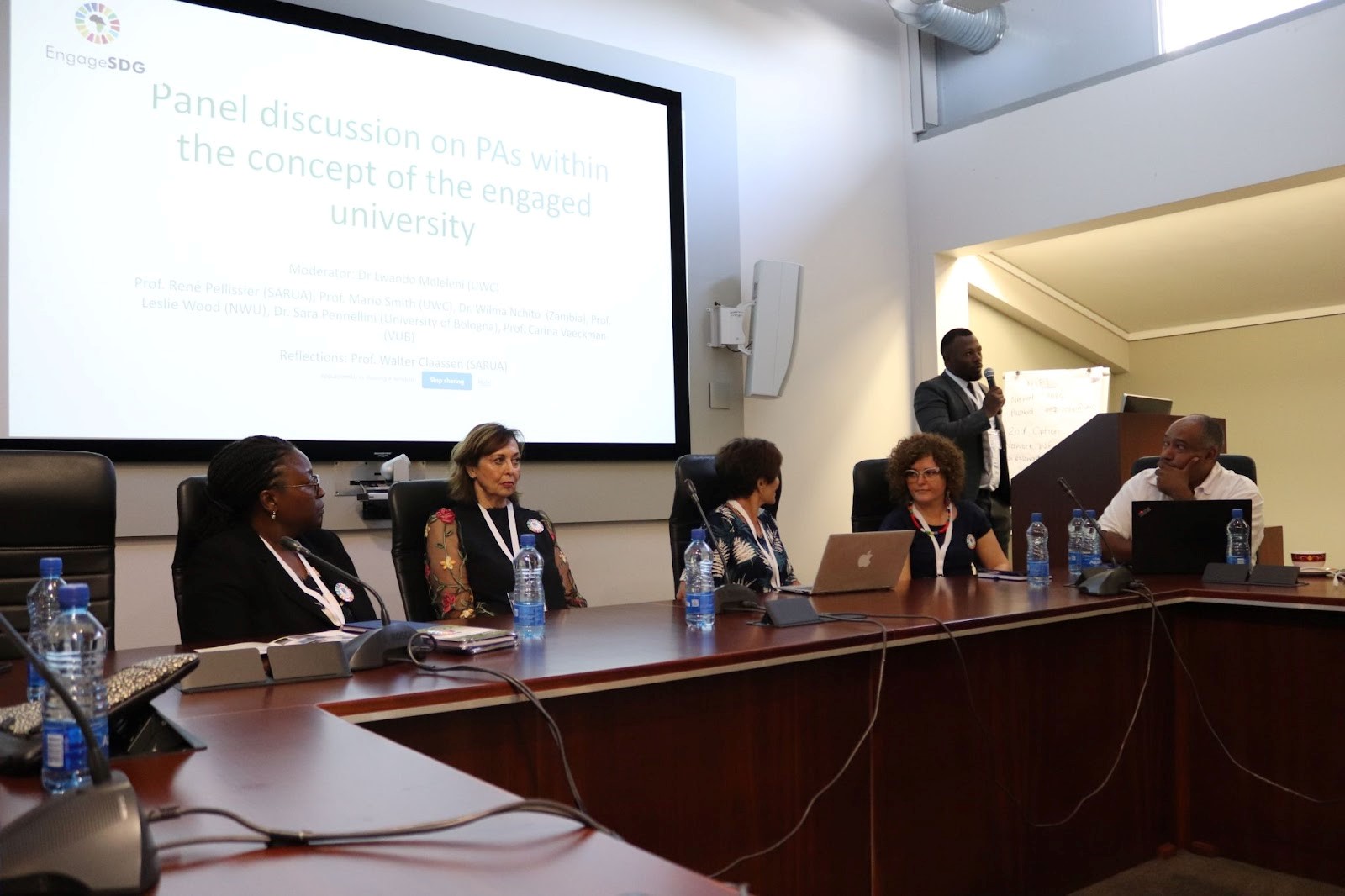 Panel discussion around engagement across institutions aligned with the objectives of this project: Moderator: Dr Lwand Mdleleni (UWC)
The key message from a panel discussion emphasised the importance of collaboration, knowledge exchange, and empowerment in achieving project objectives.
It highlighted the role of engaged universities as catalysts for positive change and emphasised the need for holistic approaches that integrate research, education, and community engagement, such as participatory approaches.
Additionally, the panel stressed the significance of long-term partnerships and sustainable practices to ensure the continued success and impact of capacity-building initiatives.
The EngageSDG project emphasizes the importance of long-term, sustainable partnerships that extend beyond the initial project duration.
By fostering multi-sectoral networks and facilitating organizational changes within partner institutions, the project aims to establish a lasting legacy of collaboration and community engagement.
This long-term vision is essential for achieving tangible and enduring progress towards the SDGs.
In conclusion, partnerships like EngageSDG are instrumental in capacitating the higher education sector to contribute effectively to the achievement of the Sustainable Development Goals.
By harnessing the collective wisdom, resources, and expertise of diverse institutions and stakeholders, as highlighted by the perspectives shared, these collaborations pave the way for transformative solutions, capacity building, and sustainable practices that can positively impact communities at local, national, and regional levels.
The EngageSDG project, funded by the European Commission through the Erasmus Plus Programme, exemplifies the transformative potential of collaborative initiatives in this regard.
From 18 to 20 March 2024, the University of the Western Cape (UWC) hosted 13 partners for EngageSDG, which is funded by the European Commission through the Erasmus Plus Programme.
Delegates at the three-day EngageSDG Consortium The project aims to enhance the capacity of SADC universities to actively contribute to the realisation of the SDGs in their local contexts through participatory approaches (PAs).
One of the key goals of the University of the Western Cape (UWC) is to foster partnerships.
Professor Jose Frantz, Deputy Vice-Chancellor for Research and Innovation at UWC, believes that collaboration is imperative for higher education institutions to collectively contribute to a more sustainable and equitable future.
She said, "As we navigate the complex challenges facing our world, it's clear that no single entity can address them alone. Through our collective efforts, we have the opportunity to harness diverse perspectives, expertise, and resources to make meaningful progress towards the SDGs".
One of the key strengths of this partnership lies in its ability to harness the collective expertise and perspectives of its members. As Ms. Elizabeth Colucci, Director of International Projects from OBREAL, highlighted, "This project is the fruits of labour of many. Very few projects are tackling SDGs from such a distinct static and southern African perspective like this project will, in collaboration of course, with a very dynamic group of European institutions who will be bringing their experiences, their knowledge, their institutional capacities but also their openness to learn and partner with the institutions in Africa."
Collaborations between universities, research institutions, and relevant stakeholders facilitate the exchange of best practices, knowledge, and technology, ultimately enhancing the effectiveness of educational programs and research endeavors aimed at sustainable development. These initiatives create a synergistic environment for addressing complex global challenges.
Moreover, partnerships facilitate the integration of diverse viewpoints and experiences, which is crucial for developing contextually relevant and sustainable solutions. The EngageSDG project recognizes the importance of incorporating local knowledge and engaging with communities, ensuring that the proposed solutions resonate with the unique socio-economic, cultural, and environmental landscapes of the regions they serve.
As Professor Martin Oosthuizen, Executive Director of the Southern African Regional Universities Association (SARUA), believes, "This project is extremely exciting, and I think that hopefully, we can learn together about how we can draw our local communities in as partners in developing knowledge that makes a meaningful impact on the quality of their lives."
Shared expertise and resources enable the development of innovative solutions, ensuring a comprehensive approach to achieving SDGs.
Collaborations also amplify the impact of EU-funded projects as they often involve diverse perspectives from across member states.
The societal engagement is a core responsibility of higher education systems, and EngageSDG intends to support partner institutions as well as other institutions within the SADC region to implement reforms that will allow them to be more inclusive, fully-fledged constituents of civil society, by putting their knowledge and resources at the service of their local, national, and regional communities.
The project aims to enhance local impacts in South African, Zambian, and Mauritian HE institutions by integrating sustainability-related knowledge into outreach strategies, teaching, learning, and research aligned with the SDGs.
It promotes active citizenship through partnerships between HE institutions and their communities to address societal challenges and change attitudes and values in the SADC HE sectors.
These partnerships may lead to potential changes in organizational structures within partner and other HE institutions, as well as multi-sectoral networks.
Panel discussion around engagement across institutions aligned with the objectives of this project: Moderator: Dr Lwand Mdleleni (UWC)
- Prof. Rene Pellissier (SARUA)
- Dr Wilma Nchito (Zambia)
- Prof Leslie Wood (NWU)
- Prof Mario Smith (UWC)
- Dr Sara Pennellini (University of Bologna)
- Prof Carina Veeckman (VUB)
The key message from a panel discussion emphasised the importance of collaboration, knowledge exchange, and empowerment in achieving project objectives.
It highlighted the role of engaged universities as catalysts for positive change and emphasised the need for holistic approaches that integrate research, education, and community engagement, such as participatory approaches.
Additionally, the panel stressed the significance of long-term partnerships and sustainable practices to ensure the continued success and impact of capacity-building initiatives.
The EngageSDG project emphasizes the importance of long-term, sustainable partnerships that extend beyond the initial project duration.
By fostering multi-sectoral networks and facilitating organizational changes within partner institutions, the project aims to establish a lasting legacy of collaboration and community engagement.
This long-term vision is essential for achieving tangible and enduring progress towards the SDGs.
In conclusion, partnerships like EngageSDG are instrumental in capacitating the higher education sector to contribute effectively to the achievement of the Sustainable Development Goals.
By harnessing the collective wisdom, resources, and expertise of diverse institutions and stakeholders, as highlighted by the perspectives shared, these collaborations pave the way for transformative solutions, capacity building, and sustainable practices that can positively impact communities at local, national, and regional levels.