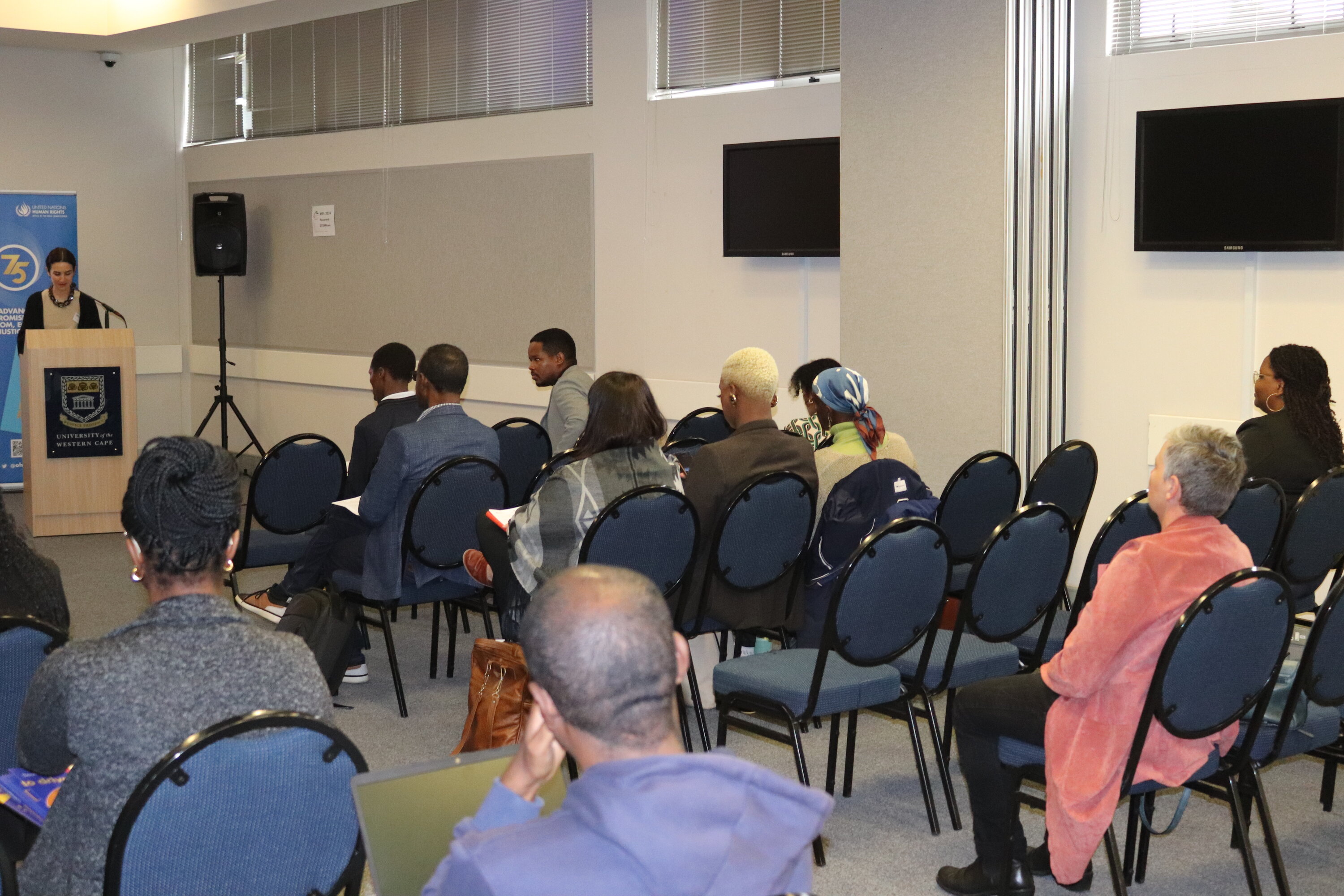
The event, aptly titled "Leave No One Behind: Documentation as a Gateway to Dignity and Human Rights," brought together minds from across the spectrum of academia, government, and civil society.
The two-day symposium sought to raise awareness of key stakeholders, including government and civil society in South Africa, on the importance of documentation for exercising human rights.
It will, among other things, interrogate the impact of non-registration and lack of documentation on the realisation of human rights.
Prof Tinashe Carlton Chigwata, Associate Professor and Head of Multilevel Government at the Dullah Omar Institute (DOI), in his opening remarks, noted that given the Dullah Omar Institute's history, the University general's history, and the focal areas of the Institute, it's only befitting that UWC hosts this important event.
At this University, we not only dream but seek to move from ‘Hope to Action Through Knowledge’.
The Global Context

With an estimated 281 million people living outside their birth countries, the challenges of documentation for migrants, refugees, and asylum seekers have reached unprecedented levels.
These challenges directly impact access to essential services like healthcare and education, touching on multiple UN Sustainable Development Goals (SDGs):
SDG 16: Promoting peaceful and inclusive societies
SDG 16.9: Providing legal identity for all by 2030
SDG 10: Reducing inequality within and among countries
SDG 17: Partnerships for sustainable development
The symposium aimed to go beyond academic discourse. It sought to showcase research, share experiences, and, most importantly, propose solutions.
Participants were urged to see beyond papers and numbers to the human faces behind each document.
Prof Frantz said: "I look forward to two days of insightful, evidence-based, and fruitful deliberations that will bring us closer to a world where documentation truly serves as a gateway to dignity and human rights for all."
She asked that as they deliberated they should not forget that behind every document there is a human and we should find person-centered approaches.
South Africa's Journey
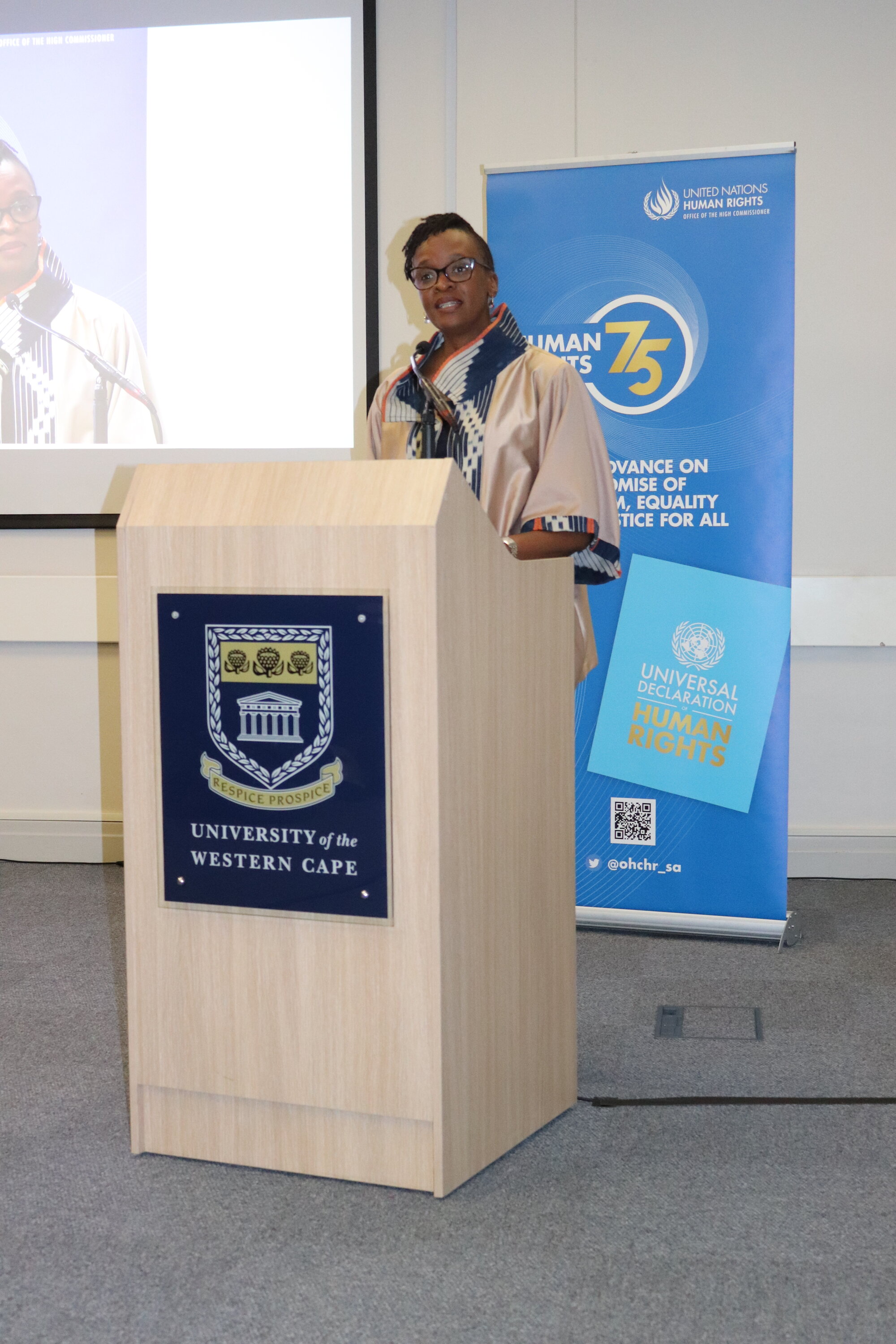
She framed the discussion within South Africa's 30 years of democracy and the 75th anniversary of the Universal Declaration of Human Rights.
Noko painted a vivid picture of South Africa's painful history, where the infamous passbook was once a tool for repression and racial segregation. Today, while the country boasts a globally respected constitution, challenges persist.
"Although human rights shouldn't be contingent on documentation, the lived reality is that documents often facilitate access to fundamental rights such as healthcare, education, and social protection," Noko explained.
The symposium's discussions aim to explore various dimensions, including documentation's relationship with economic and social rights, geographical access disparities, migration issues, and birth registration as a rights enabler.
Noko concluded by urging participants to champion human rights and bridge the gap between aspirations and realities, ensuring that documentation is a gateway to dignity and human rights for all rather than a barrier to belonging and visibility in society.