People displaced by the conflict in Cabo Delgado, a northern province in Mozambique, wait next to a truck on the outskirts of Mueda. Image: Igor Barbero/MSF
The insurgency in the Cabo Delgado province of Mozambique has displaced an estimated 800 000 people with minimal media attention. UWC chairperson for the Department of History, and Associate Professor, Paolo Israel, said Cabo Delgado was now caught between conflicting interests - including mining and oil corporations, regional powers and international jihadi networks. Professor Israel has been researching the region for more than 20 years.
Prof Israel said the conflict on our doorstep should garner more interest from South Africans, during his lecture at UWC’s Library. His most recent visit to Cabo Delgado was a five-month stint during the second semester of 2023. Describing the region, which borders Tanzania in the north, Prof Israel said: “It was also drawn, from the 18th century onwards, into the maelstrom of Indian Ocean slavery.
“So its societies were very much shaped by violence, slaves that went to the Mascarene Islands (Mauritius and Reunion), Madagascar, Brazil and the Cape (of Good Hope).”
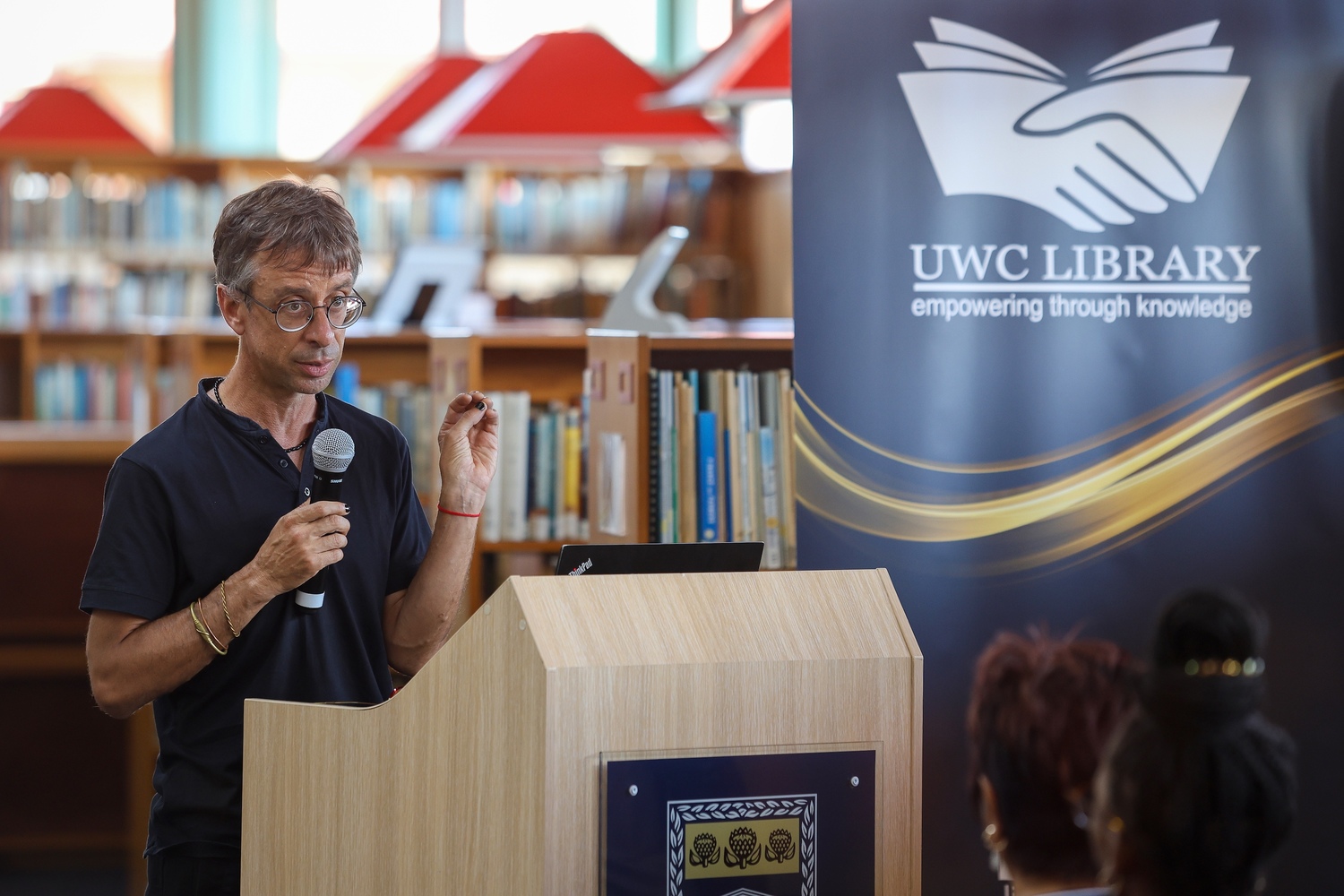 Professor Paolo Israel speaks about the insurgency in the Cabo Delgado province of Mozambique Image: Shelley Christians/UWC
“It was also affected by the civil war which ravaged Mozambique between 1977 and 1992,” said Prof Israel who described Cabo Delgado, in this context, as a place with a very deep and layered history of violence.
“When peace came to Mozambique in 1994, the place was brimming with enthusiasm, and part of the enthusiasm was laser-linked to the discovery of massive (natural) resources.”
The natural resources came in the form of potentially the third biggest gas field in the world, rubies, graphite and illegally trafficked ivory from the neighbouring reserve in Niassa. He also pointed out that Cabo Delgado is on the major smuggling routes for heroin from Pakistan to South Africa and the rest of the world.
Instead of being a boon to the locals, Prof Israel said, like many other places, the discovery of natural resources was not good news for the population.
“The local Muslim coastal populations, especially the youth, were influenced by radical propaganda coming (especially) from Kenya, Somalia and the DRC in the context that they had been marginalised by the post-colonial Christian-aligned and secular regime,” said Prof Israel.
All this, he said, happened in a context in which the post-colonial regime, which had once been socialist, had turned to unbridled neo-liberal extraction with a firm grasp on state power while basically plundering the resources.
“These youths, mobilised by regional and international jihadi networks, attacked a police station in October 2017 in the town of Mocimboa da Praia,” said Prof Israel.
“This was followed by a brutal state repression. My family and I were there when we saw helicopters shelling entire villages.”
That reaction, from the Mozambican government, had the effect of more youngsters joining the insurgency. The situation escalated in 2019 when this insurgent group, with links to the ADF in the DRC, pledged an oath of allegiance to the Islamic State.
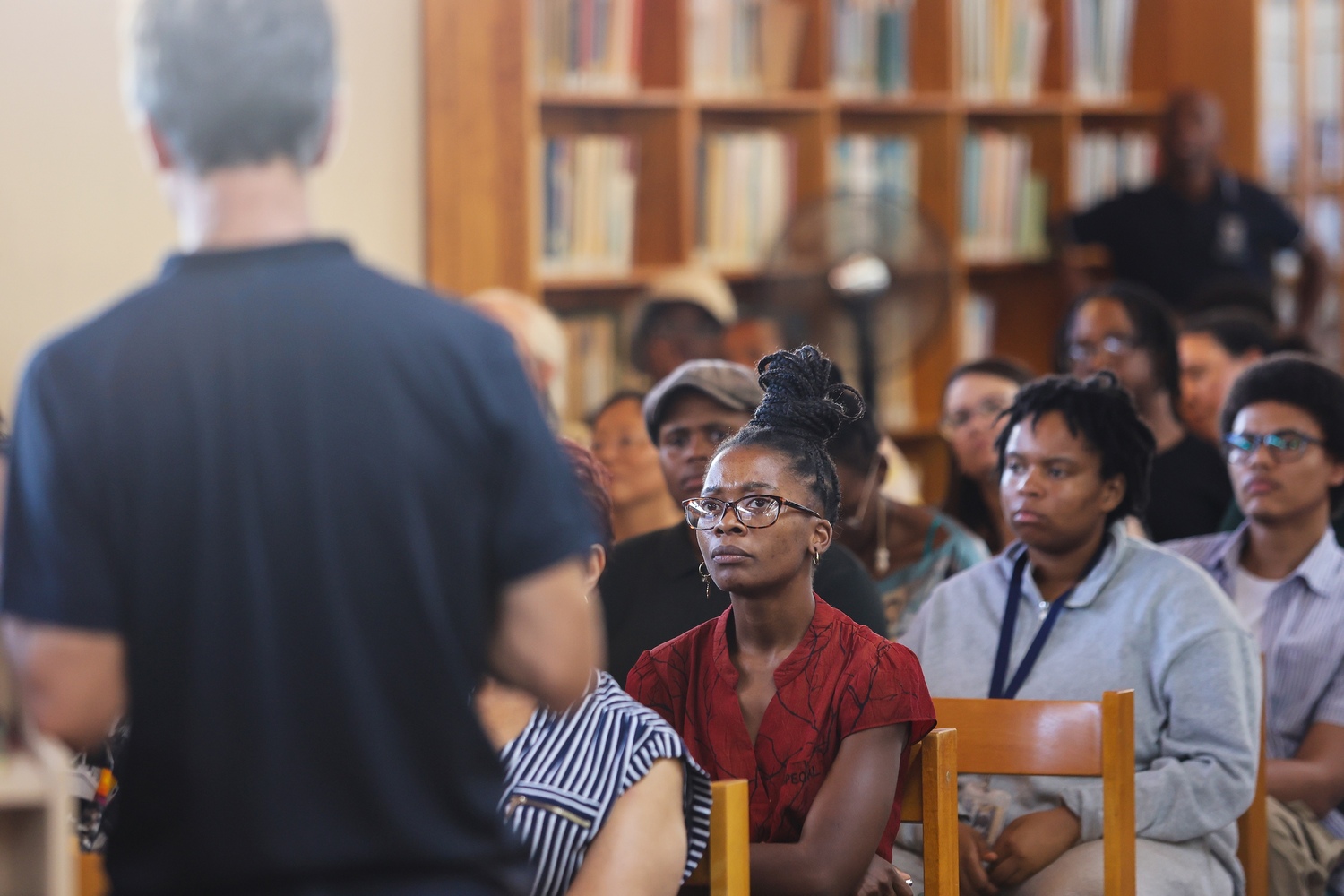 Prof Israel said the conflict on our doorstep should garner more interest from South Africans. Image: Shelley Christians/UWC
Prof Israel touched on the impact that the conflict, and the subsequent State repression has had on the music of the region, with lyrics to some of the popular songs often being ambiguous, often using metaphors, to mask their subversion.
He said the song and dance of the region were core to their historical consciousness and that they were endowed with critical licence, allowing people to talk back to power through their idioms.
“They’re also playful. Shaped by competition and innovation. At the same time they have been, in significant ways, captured by the State so that while critical licence had somewhat been frozen into a praise of State power, and especially of the socialist regime,” said Prof Israel.
During the Q&A session, fourth year LLB student Marcfalda Mogola questioned Prof Israel’s “privileged access” to Cabo Delgado and said that she would have liked to hear indigenous voices.
In response, Prof Israel said that even though he was privileged, in the end, between the choice to keep silent and leave the floor to security experts and consultants, and conveying what he did know, he chose the latter, flawed as his positionality might be. He also spoke about the constraints of knowledge production in a “securitised” environment.
Thumbnail Image: Shelley Christians