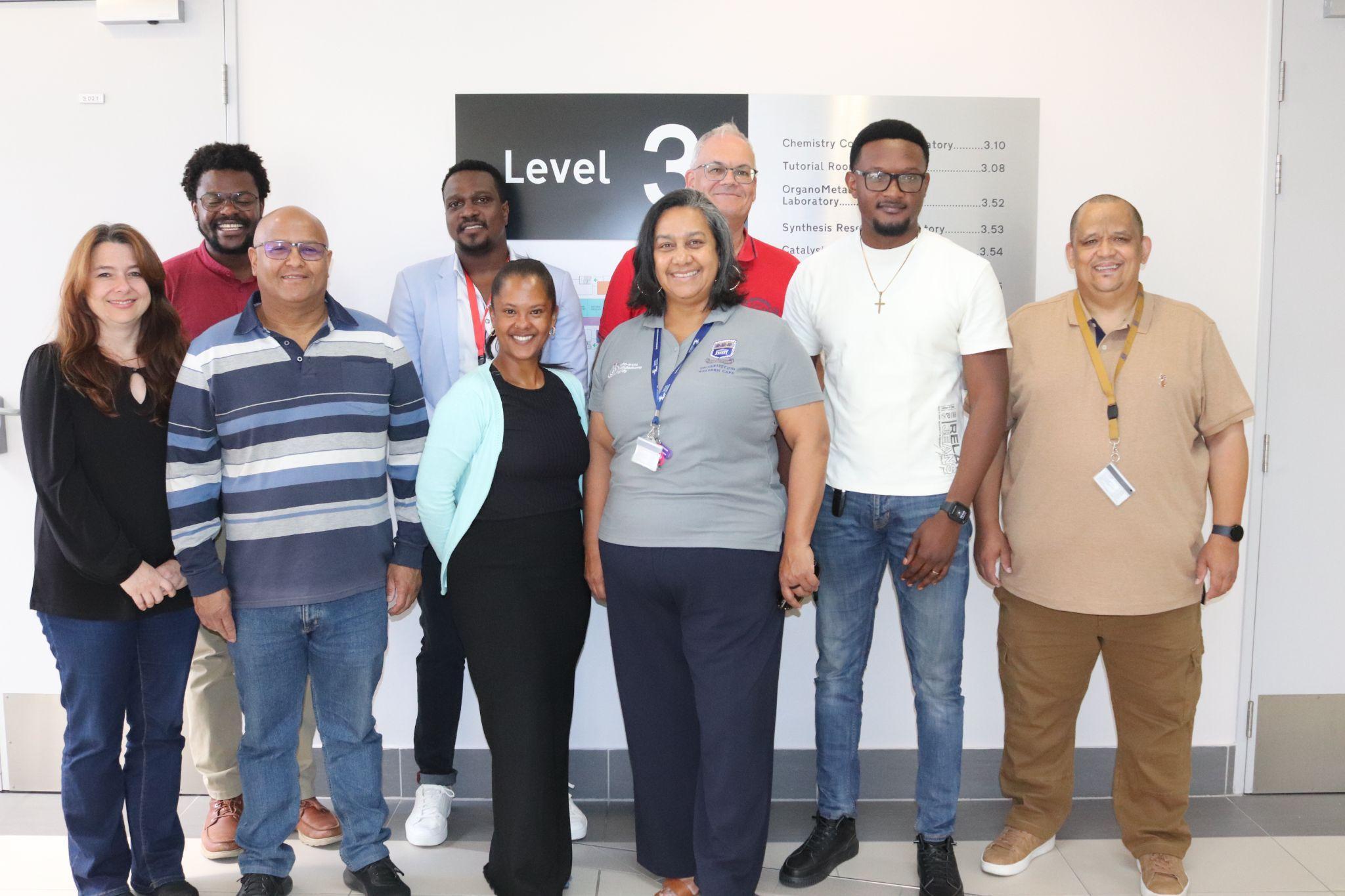
The Electrochemical Sensors Node of the DSTi funded Nano-micro manufacturing facility (NMMF) hosted its very first teaching and training workshop in the multidisciplinary field of printed electronics, from 18-28 November 2024, right here on home soil. The workshop comprised a positioning lecture series that provided an introduction and training on specialised topics in optical, analytical and electrochemical measurement, combined with hands-on training in screen printing, 3D printing, basic electronics and device prototype conceptualisation.
This type of intensive training workshop aligns with the objectives of the
Organic and Printed Electronics Association, which is the leading international industry association for the emerging technology of flexible, organic and printed electronics.
This particular workshop, led by the Electrochemical Sensors Node director, Prof Baker, and her team, brought together experts in the fields of Chemistry, Physics, Community Health, and Biomedical Engineering. Top MSc, PhD, and postdoctoral candidates registered at UWC for the full-time study were challenged to conceptualise continuous monitoring scenarios for Tuberculosis and non-communicable diseases such as cancer, diabetes, and heart disease - some of the leading causes of death worldwide. The major shortcoming of modern medicine lies in the absence of continuous monitoring tools to inform medical practitioners of the early onset and progression of a disease. Most current medical interventions are designed for
Ex post facto implementation.
Participants were provided with all the necessary skills, training, raw materials, and a fully capacitating and enabling environment at the newly launched Electrochemical Sensors Node laboratories at UWC to structure the truly innovative and brilliant concept proposals developed in the workshop. The projects emerging from this workshop were evaluated as being “of an exceptionally high standard” by the international specialist Engineer, Mr. Joachim Biegel, from Coruna Printed Electronics GMBH (Switzerland), and these projects are expected to catalyse international collaborations and lead to Technology Innovation Agency (TIA) applications in 2025.
The two weeks concluded with an inspiring UWC entrepreneurial success story presentation, demonstrating the real-world impact of such academic initiatives. Team excellence recognised and celebrated the innovative spirit of these emerging researchers. Atherton is a former MSc Nanoscience Teaching and Training platform - this is another DSTi investment at UWC.
On the last day of the two-week workshop, the groups could present their disease monitoring concept product, with electronic components printed directly onto wearable T-shirts, to bring home the critical message of continuous monitoring of health biomarkers and demonstrate proof of concept. Student prizes were awarded to give recognition to the exceptional achievements of the first-ever Printed Electronics Workshop of the Electrochemical Sensors Node (NMMF, University of the Western Cape).