Archbishop Thabo Makgoba and Professor Brian O Connell
During his tenure,UWC flourished, establishing itself as a leader in social justice, academic excellence and community engagement. Prof O’Connell was a visionary strategist with a deep commitment to transformation, but his humility and compassion left an equally lasting mark. He believed in education’s ability to empower individuals and societies, fostering a culture of shared responsibility and collaboration within the University. This spirit of unity motivated staff and students to strive for excellence together.
Colleagues who worked closely with him recall his generosity, warmth and unwavering belief in the potential of others. Many have shared heartfelt tributes about how his encouragement shaped their careers and championed their ideas, and his dedication to transformation inspired them to transcend limitations.
Through these tributes, we honour Prof O’Connell’s legacy and celebrate a leader whose influence extended far beyond policies and achievements. His impact will continue to resonate in UWC’s community and South African higher education for generations.

Throughout his career, Prof O’Connell held various leadership positions that reflected his belief in the transformative power of education. His journey began as a teacher and expanded to include roles as a high school principal, senior lecturer at UWC, and Rector of Athlone Teaching College. He also served as the Superintendent-General of the Western Cape Education Department before becoming the Rector and Vice-Chancellor of UWC.
At UWC, one of his defining contributions was steering the University through a period of renewal and transformation. Under his leadership, UWC solidified its status as a leading institution of higher learning, committed to opening its doors to students from disadvantaged backgrounds. In his vision, education was not a privilege for the few, but a right accessible to all.
This vision was grounded in a comprehensive understanding of the complex challenges facing South Africa. His leadership reflected his passion for addressing these challenges head-on. His focus on academic excellence, combined with his belief in the University’s role as a transformative institution in society, led to a renewal of UWC’s reputation and influence. He played a key role in promoting a culture of intellectual inquiry, social responsibility, and innovation at the university. Through his efforts, UWC continued to produce graduates who made meaningful contributions to South Africa’s ongoing development.
Beyond his work at UWC, Prof O’Connell engaged in various national and international initiatives aimed at promoting justice, reconciliation, and educational advancement. He co-founded the Southern African Nordic Centre (SANORD), an organisation that supports collaboration between Southern African and Nordic universities. He served as Chair of the Institute for Justice and Reconciliation, where he played a key role in promoting dialogue and understanding in post-apartheid South Africa. His contributions extended beyond academia and into community development and policy. This broader involvement reflected his integrated approach to education and social change.
Regardless of his accomplishments, Prof O’Connell remained humble. He was known for his warmth and kindness, along with his remarkable ability to connect with individuals from all levels of society. Whether addressing students, colleagues, or community members, he treated everyone with respect and dignity. His ability to lead with both heart and intellect, left an impression. His humility and compassion for others established him as a respected leader, earning deep admiration from all who knew him.
Prof O’Connell’s legacy extends to his family, who were an integral part of his life. He is survived by his wife, Judith, also an educator of note, and his children, Amanda-Leigh and Bryan. Together, they carry forward the values he championed. His memory will live on through the countless lives he touched, and his life’s work in education and social justice will continue to inspire future generations.
- Prof Pretorius is the Rector and Vice-Chancellor of the University of the Western Cape.

A key component of Prof O’Connell’s vision was to break the apartheid era-defined mould for UWC and firmly launch the University on an accelerated research, with societal impact, trajectory. UWC’s research growth under Prof O’Connell’s leadership was remarkable. At every turn, the University challenged and overturned the accepted beliefs about what was probable and possible with a moderate internal budget. UWC determinedly moved rapidly into new areas of knowledge, opening up endless teaching, learning and research opportunities. The Faculty of Natural Sciences was a key beneficiary of this renewed research focus, with a new, half a billion rand Life Sciences building opening its doors in 2010. Prof O’Connell’s role in raising the funds for this state-of-the-art building was absolutely key to getting the project off the ground.
Always passionate about the future of UWC, Prof O’Connell was able to articulate his vision for the University to any audience. It was, therefore, not surprising that Prof O’Connell was able to so inspire businessman and philanthropist Charles “Chuck” Feeney, founder of Atlantic Philanthropies (one of the largest private charitable foundations in the world) over dinner, with his vision for Science@UWC, that he signed a cheque for half the cost of the new Life Sciences building the following morning! Widely regarded as one of the best buildings of its kind in the southern hemisphere at the time; the research and teaching facilities offered by the Life Sciences building have been the catalyst for much of the Faculty’s research success over the past decade, and remain a lasting legacy to Prof O’Connell and his vision for Science@UWC.
With a research-intensive trajectory well established and the Faculty, with Prof O’Connell and the University’s unflinching support, delivering on the investments made, the Faculty was awarded seven NRF SARChI Research Chairs over the period 2010-2012. A new state-of-the-art Chemical Sciences building followed in 2014, just before Prof O’Connell retired, with a concomitant significant multi-million rand NRF investment in molecular science research equipment.
My very fond memories of working closely with Prof O’Connell are of his infectious and inspirational positivity, his sense of humour, and his Faith, coupled with his profound sense of humanity and respect for others. Through his inspiring and visionary leadership, Prof O’Connell showed us that nothing is impossible in South Africa if we all work together with determination and mutual respect in pursuit of the common good. May his soul rest in peace.
- Mike Davies-Coleman is an Extraordinary Professor at UWC and former Dean of the Faculty of Natural Sciences (2012-2021).

These challenges were perhaps epitomised by the study of religion and theology at UWC. The decline in student numbers in Arts affected, in particular, the subject “Biblical Studies” that was offered since the 1970s. It was no longer a subject in secondary education, scholarships for teacher training were no longer available, and public pronouncements by political leaders singled out this subject as an example of what is not needed to meet South Africa’s challenges. First-year student numbers dropped from more than 600 in the early 1990s to fewer than 100 by 1998.
The staff establishment in the short-lived Faculty of Religion and Theology (1995-1999) shrunk from 19 in 1995 to 15 in 1998 and six in 2000, following the resignations of Prof Russel Botman and Dirk Smit. This was followed by the retirement of Prof Denise Ackermann (in 2000) and Prof Daan Cloete (in 2003). This was a department threatened with closure, fragile, and emotionally drained.
By the time Professor O’Connell retired in 2014, the department was thriving – as was the case with the University itself. How was such a turn-around possible? It would be inappropriate to attribute this to the direct influence of the Rector – who opened quite a few departmental conferences and offered occasional words of encouragement but was not overtly involved in the affairs of the department. Nevertheless, his own deep sense of Catholic spirituality, blended with poetry and stories, served as a source of inspiration for many. In his typical leadership style, Prof O’Connell surrounded himself with intellectual leaders and created a climate within which others could flourish, while attending to the positioning of the University within a national and international context. Without such institutional space and support, the study of religion and theology would not have been able to flourish as it evidently did.
The story of this turn-around in the study of religion and theology has been told elsewhere and need not be repeated here. Suffice it to say that it culminated in a series of Desmond Tutu lectures (one by the Arch himself), the establishment of the Desmond Tutu Chair of Ecumenical Theology and Social Transformation in Africa and of the Desmond Tutu Centre for Spirituality and Society, now renamed as the Desmond Tutu Centre for Religion and Social Justice. There was a memorable visit to the Desmond and Leah Tutu Legacy Foundation in the Waterfront – that Brian O’Connell facilitated – to formalise the process. It was, as may be expected, a joyous occasion with lots of laughter and stories. What a privilege to have a “dream team” with such a Chancellor and Vice-Chancellor working in tandem to turn a fragile institution into a leading university on the African continent!
- Prof Ernst Conradie is a senior professor in the Department of Religion and Theology at UWC.
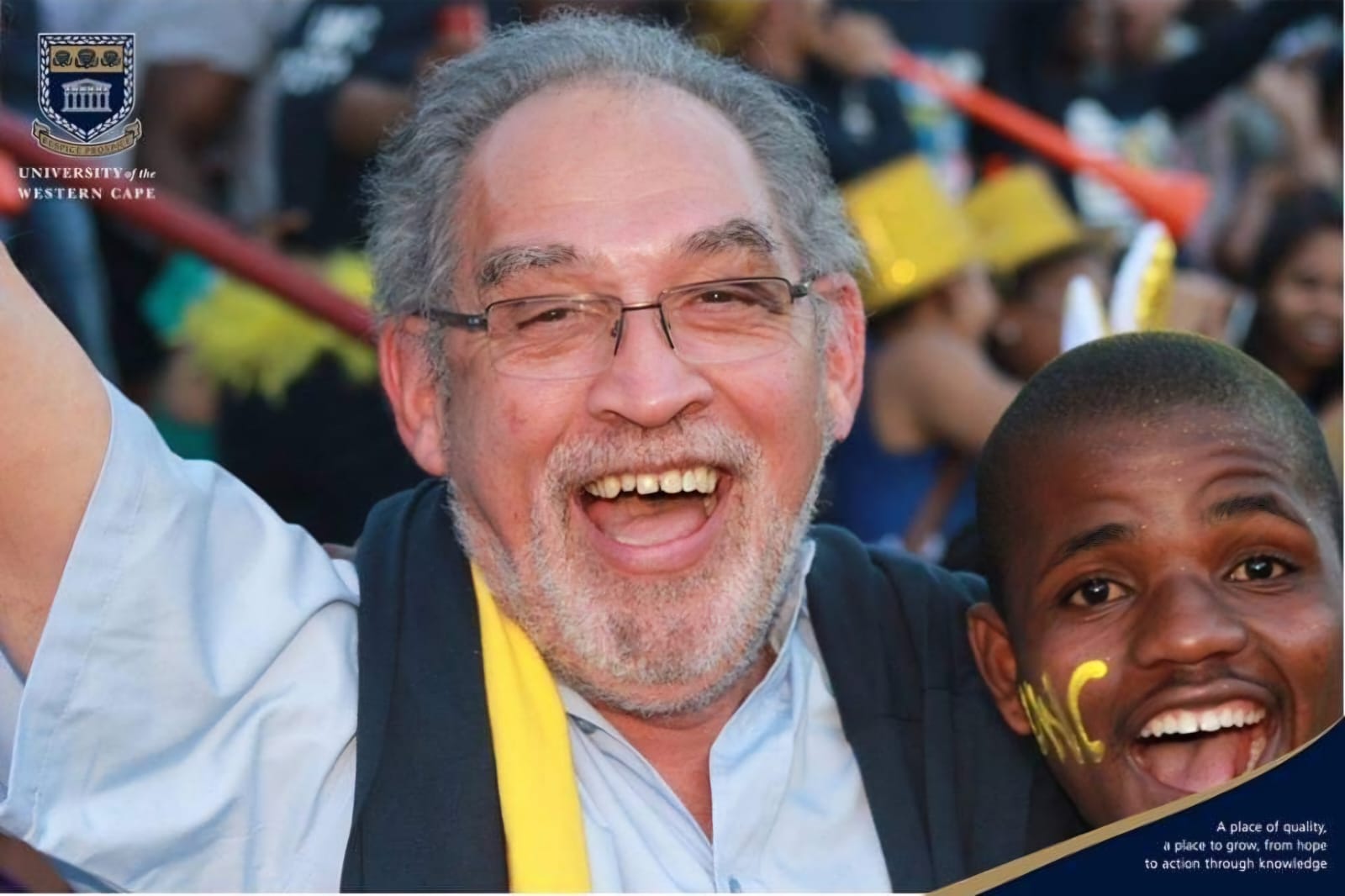
As we arrived at the Student Centre, we found ourselves stepping around a man in late middle age, neatly dressed in a blue blazer, who was down on his knees, scrabbling around on the floor at the entrance of the building. This, we realised, was none other than our Rector and Vice-Chancellor, Professor Brian O’Connell. He was picking up little bits of trash: bottle caps, plastic straws, chip packets, Chappies papers.
“The young people”, he remarked to us as he stood up and dusted his knees, “are so unaware. They don’t think of the cleaners and ground staff who have to pick up their litter”. Then he deposited the rubbish in one of the big green UWC recycling bins that stood nearby, greeted us in friendly fashion, and accompanied us to our meeting.
That was Brian O’Connell as we knew him: mindful of both the noble and the humble work entailed in keeping a university going; rubbing shoulders with the great and the good; but never seeing himself as more important or more dignified than the men and women who serve the university in humbler ways. He believed in the dignity of every individual and knew that it takes more than grand gestures to maintain the health and vitality of an institution; it takes an unwavering commitment to the everyday tasks, the small, often unnoticed acts of care.
He leaves a deep void in our hearts. He was a transformative leader whose warmth, vision, and humility resonated throughout the institution and beyond.
When UWC was on the brink of financial ruin, many doubted its future. But under his stewardship, the university rose from the ashes, redefining itself as a beacon of academic excellence and intellectual engagement. His tenure marked UWC’s ‘phoenix moment’ - a transformation that ensured the institution’s place among South Africa’s leading academic centres.
Perhaps one of his most lasting legacies was his vision of UWC as a “sense-making institution”. He challenged the university to bridge the gap between scholarly rigour and the harsh realities of life for impoverished communities. His belief that academic institutions should contribute meaningfully to society became the guiding principle of UWC, and it inspired generations of students and academics alike. His approach was never about ivory tower detachment but about a grounded, public scholarship that sought solutions to South Africa’s most pressing issues. He was a man who understood that leadership is not just about making decisions but about embodying the values of integrity, humility, and service.
May his memory be a source of inspiration to all of us.
- Prof Du Toit is from UWC’s School of Government.

While serving as a member of the UWC Institutional Forum and the UWC Council from 2005 to 2014, I had the special privilege of observing your humility as you contemplatively and attentively listened to all the speeches and the variety and variations of ideas the members presented. During the period 2001 to 2007, I watched with great admiration your indefatigable visionary leadership in the ‘search for identity’ for UWC in the post-apartheid era, as well as the development of the strategic framework for building the University’s academic, administrative, infrastructural and sociocultural systems and processes, suitable for the 21st century.
Your determination to ensure that the “UWC Project” became a success story, was incomparable; and the passion with which you spoke about and explained your vision for UWC was captivating and compelling.
Prof O’Connell, you understood the importance of mental health and a conducive learning environment in the successful implementation of any academic plan, and thus worked toward the development of modern recreational and residential facilities at UWC. Prof O’Connell, you enabled and supported the creation of research centres and institutes and the identification of research entities, which you envisioned as the fulcrum to propel the intensification of the research, teaching and learning, and cultural activities of the University.
Your ability to unabashedly canvass for funds from governments, governmental and non-governmental agencies, philanthropists and other donors for the physical and infrastructural developments, as well as for staff and student capacity building at UWC, was legendary, to say the least. State-of-the-art Chemical Sciences Building, Life Sciences Building, Public Health Building and modern hostels, among others, that were erected during your tenure, are all testament to your great effort and are part of your legacy.
Thanks to your leadership and your knack for identifying exceptional talent, the period 2008 to 2014 saw an acceleration in the national and international visibility, competitiveness and impact of UWC.
Adios, Prof Brian O’Connell! Adios, the great leader and the great educationist! Your many accolades and recognitions will always remind us of you. We will always remember you for the exemplary service you rendered to UWC in particular, and to the South African nation in general. Adios!
- Prof Iwuoha is from the UWC Department of Chemistry
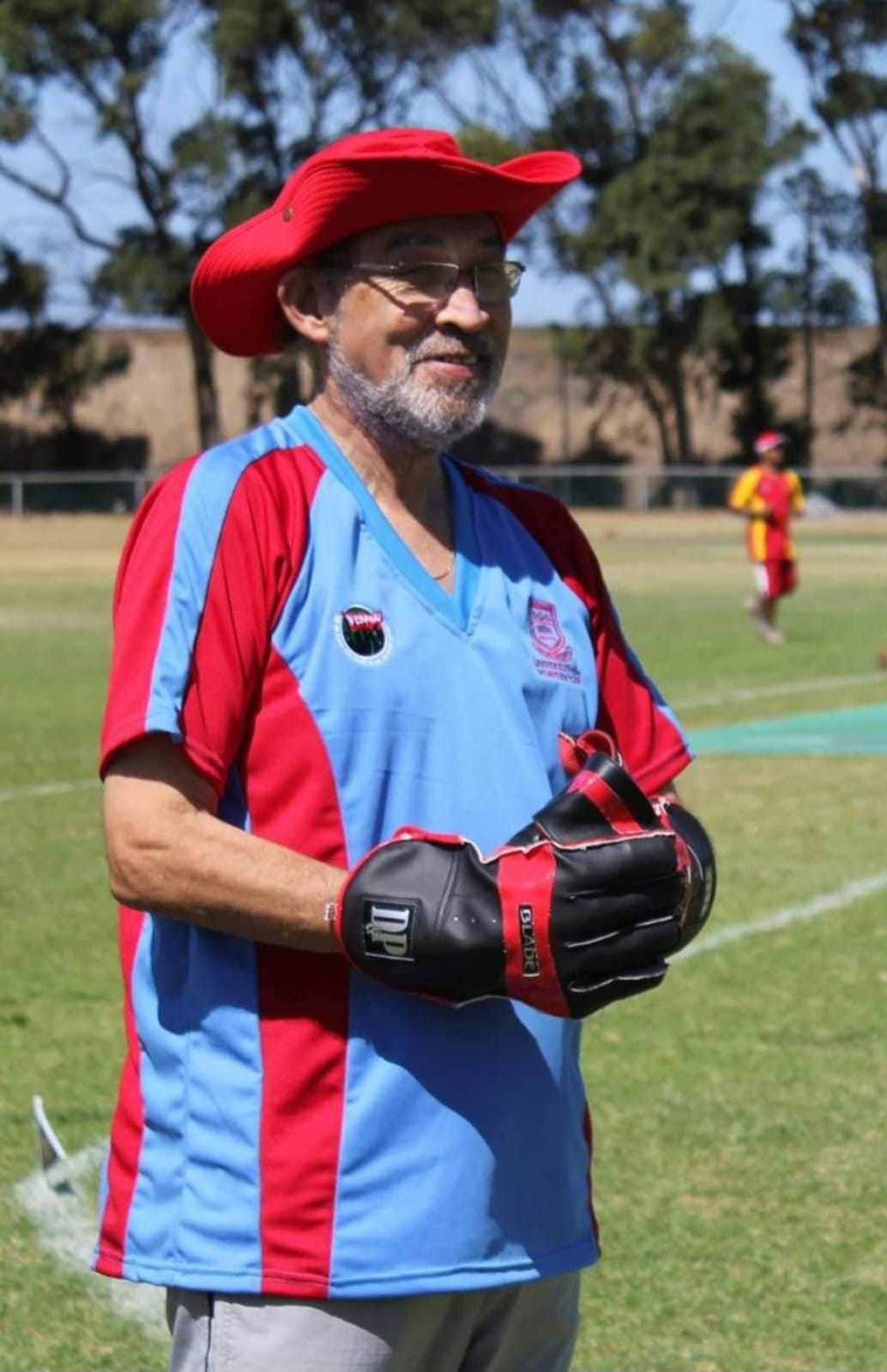
He joined UWC at a time when the erstwhile Public Health Programme had just stepped out of its baby shoes and become a fully-fledged School of Public Health under the leadership of the late Prof David Sanders. I remember Prof O’Connell speaking at one of the informal graduation ceremonies at our annual Winter School soon after his arrival. He was visibly impressed by the hall full of health professionals eager to learn about rebuilding the South African health system, as we were by his erudite and inspiring vision for UWC and for the School of Public Health (SOPH).
Many will fondly remember his rousing speeches, his playful spirit during games of dominos with students, and his firm belief in punctuality as a form of respect. These traits, combined with his strategic brilliance, helped him lead a successful campaign to avoid a merger in the early 2000s.
I have very specific memories of his leadership that helped shape the future of the SOPH: in 2003 and 2004 David Sanders and I had been in negotiation with The Atlantic Philanthropies (AP) about a possible grant to the SOPH. When the foundation’s board visited South Africa and UWC in 2005 to get to know our work, Prof O’Connell invited the Board to lunch in the Council chamber. I will never forget his welcoming speech about UWC’s history and its aspirations for the future, which moved and captivated everyone in the room. His words reflected not only his passion but also the deep understanding of UWC’s mission, inspiring confidence and commitment from the board, including founder Chuck Feeney.UWC became one of AP’s most generously supported institutions. The visible outcomes of this encounter are the School of Public Health and Life Sciences buildings, which, standing right on Robert Sobukwe Road, announced to the world that UWC was leaving its Apartheid origins behind and claiming its rightful place as an exciting place of academic excellence in the country and on the continent.
For the SOPH another development was even more significant: Prof O’Connell agreed to add seven new posts to the School’s tiny staff complement at the time, which were initially funded by AP, but then taken into the University establishment. This was a quantum leap in our development, strengthening our foundations to grow our post-graduate programme and to attract external support for the cutting-edge research, teaching and advocacy the SOPH is known for on the continent.
In later years, Prof O’Connell often brought visitors to the SOPH, and, standing on our top balcony, pointing north, outlined his vision for UWC’s and the health science’s expansion towards the Bellville CBD. Even after his retirement he often came to visit, supportive as ever of our role in strengthening health equity and social justice on the continent. His vision and his insight, his laughter and wit, his eloquence and wonderful humour, will be deeply missed. However, his legacy remains profound and visible on our campus.
- By Prof Uta Lehmann-Grube, Director of the School Of Public Health at UWC

In 2012 the South African SKA Project was successful in winning the international bid to host the SKA mid-frequency dish array. A national programme was launched to build the precursor telescope array MeerKAT and to recruit and train astronomers. By 2018, 64 dishes, each nearly 14 metres in diameter, had been manufactured and positioned at the SKA site near Carnarvon. MeerKAT began science operations in 2019 and is today widely acknowledged as the world’s best radio telescope. Currently, MeerKAT is being expanded into the full SKA mid-frequency array, which will operate for many decades into the future.
UWC has played, and continues to play, a key role in this world-leading science enterprise based in Africa. The UWC Astro Group is internationally recognised for its research excellence. Furthermore, UWC plays a leading role in training a new generation of students in South Africa.This rapid growth from humble beginnings to international stature is an amazing success story for UWC, initiated by the visionary leadership of Prof O’Connell.
- Prof Maartens is the SKA/SARChI Chair in Astronomy and Astrophysics.
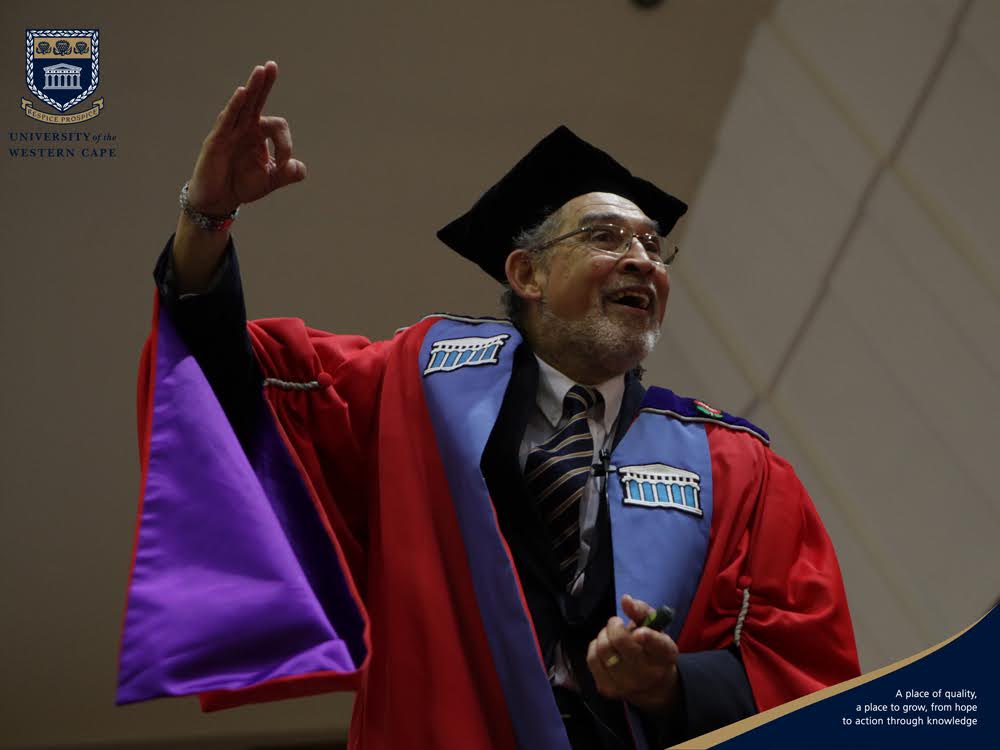
As an astute historian and experienced education administrator he brought with him his charisma, oratory powers, enormous energy, motivational skills, missionary zeal, courage, knowledge of the times and visionary leadership into an institution bedevilled with all forms of crises.
When he arrived in 2001, UWC was reeling under an enormous financial burden, instability and uncertainty about its future. Indeed, the institution was at the very precipice of cataclysmic destruction and oblivion. His arrival at UWC was at a period when the institution was in its worst economic bankruptcy. But by the time he left it in 2014, it had become an economically buoyant and academically vibrant university renowned for its cutting edge research output, innovative teaching strategies and various community oriented programmes recognised both nationally and internationally.
The impact of Prof. O’Connell’s visionary leadership on UWC and constituent faculties, departments, schools, centres, institutes and virtually every facet of the institution is certainly worthy of being celebrated and memorialised. We, at the School of Science and Mathematics Education (SSME), found his leadership style to be catalytic and inspirational. His regular motivational talks at graduation ceremonies added in no small way to our own vibrancy, academic output and overall throughput rate and productivity as a unit of the university.
Indeed, throughout the time of his tenure, SSME became the flagship of the Faculty of Education in terms of its publications and throughput rate of master's and doctoral theses in comparison to any other higher education institutions in Southern Africa or Africa as a whole. For example, the foremost African Journal of Mathematics, Science and Technology Education (AJMSTE) emanated from SMME.
Since a university is known for the quality of its research output rather than teaching per se. SSME is recognised worldwide for its collaborative research and capacity- building projects e.g. the Science and Indigenous Knowledge Systems Projects (SIKSP), GRASSMATE, Local Evidence-Driven Improvements in Mathematics Teaching and Learning Initiative (LEDIMTALI), and so on, which have led to the production of scores of master’s and doctoral graduates who are now excellent researchers and lecturers in many higher education institutions in and outside Africa.
Also, senior staff of SSME have received national and international research and teaching awards which have placed South Africa on the map of studies in science and mathematics education worldwide.
- Ogunniyi is an Emeritus Professor of Science Education at UWC. Julie is a professor of Mathematics education at UWC.

The NACWC was an implementation model that demonstrated its commitment to change through cooperative partnerships through which education and development could occur. At the peak of its delivery it reached in excess of 4000 learners and developed a skills base that was able to demonstrate flexibility and responsiveness in line with unfolding frameworks. Brian O’Connell, in characteristic humility, stated: “The NACWC has by no means been the only innovator or player in the field, nor has it ever claimed to be such. The vision of the NACWC has been to harness the collective energies of educators, communities, state departments, companies and unions in a partnership that enables learners in the system to find learning opportunities that are relevant to their situation and that are of high quality to build our communities. The task is immense and exciting…”.
Brian O’Connell’s visionary leadership and extraordinary perceptiveness in reading the signs of the times led ultimately to the location of a ‘non-government organisation’ within UWC, a university that was rapidly shedding its apartheid past. When options for a more permanent location for the development arm of the NACWC, known as the Further Education and Training Institute (FETI), were debated, there were several alternatives, but the NACWC Trust opted to follow the advice of Prof O’Connell to locate the mandate of the FETI (that of supporting and building the public vocational college sector as a viable route into education and training for youth and adults) within the Faculty of Education at UWC. The foresight displayed by Prof O’Connell in 2005 to accommodate within a university an entity focused on TVET would only be realised eight years later in 2013 when the government White Paper on Post-School Education and Training called for universities to work more closely with the TVET college system. The Institute for Post-School Studies (IPSS), established in the Faculty of Education at UWC in 2015, was the culmination of the mainstreaming of the FETI ten years after its historic incorporation by UWC. Once the IPSS had been launched at UWC, its TVET resource continued to be sought after and attracted a range of ground-breaking projects.
The mainstreaming of the FETI as an Institute of UWC is a legacy of the visionary leadership of Brian O’Connell, and we salute his unstinting commitment to transformation. The IPSS exists as a result of the enthusiasm, vision, and pioneering leadership of Brian O’Connell, an exemplary and charismatic man ahead of his time. The post-school community in South Africa is indebted to the catalytic role played by Prof O’Connell in the ultimate realisation of what started off simply as an interesting idea.
- Prof Joy Papier, Former Director of the Institute for Post School Studies at UWC and current DST/NRF SARChi Research Chair in Post School Education and Training: TVET

Founded in 2008, HySA Systems is a part of the broader Hydrogen South Africa (HySA) programme, which aims to promote just energy transition via the development and application of hydrogen and fuel cell technologies in the country.
When UWC was chosen as the key academic partner of HySA, Prof O’Connell recognised the need to create strong research capabilities in renewable energy, which eventually helped the University to become the leading international RDI Centre in hydrogen production, storage, and utilisation. This was achieved by Prof O’Connell’s critical and leading role in the fundraising for the construction of the HySA Systems home, the SAIAMC Innovation Centre, the most advanced hydrogen fuel cell facility on the African continent.
It has to be noted that HySA Systems is the lead competence centre in South Africa for systems integration and technology validation which has engineering at the core, which without the unwavering support of Prof O’Connell and the broader UWCs senior executive team at UWC, might not have been in a position to host HySA Systems. HySA Systems, through a Hub and Spokes model, outsourced some of its RDI work to engineering universities, including Stellenbosch University, University of Cape Town, Cape Peninsula University of Technology and Tshwane University of Technology and continues to do so where these spokes deliver HySA Systems product-oriented RDI.
Prof O’Connell’s guidance and attention helped HySA Systems to foster international interdisciplinary collaboration, bringing to UWC world-leading experts in engineering, materials science, and process automation, enabling the development of affordable and efficient fuel cell and hydrogen production technologies, which address local energy needs and contribute to global efforts in combating climate change.
With UWC executive leadership, HySA Systems quickly gained recognition, attracting partnerships with local and international research institutions, government agencies, and industry stakeholders. Ultimately, this resulted in the recent expansion of HySA Systems activities to the manufacturing sector in South Africa with a strong impact on job creation, energy security, and economic development, particularly in under-resourced communities.
Prof O’Connell was especially proud of the community engagement of HySA Systems community, showcasing hydrogen technologies through educational initiatives and demonstrations and inspiring a new generation of students to pursue careers in science and technology.
The success of HySA Systems is the legacy of Prof O’Connell’s lifetime commitment to innovation, sustainability and community empowerment.
- Dr Pasupathi is the Director: HySA Systems Competence Centre of SAIAMC at UWC.