This victory is not just a testament to their exceptional skill but to their unbreakable spirit and unwavering teamwork.
Under the guidance of head coach Carly van Wyk, the UWC Cheerleading team dazzled at the 4th Regional Competition of the Western Province Majorette and Cheerleading Association (WPMCA).
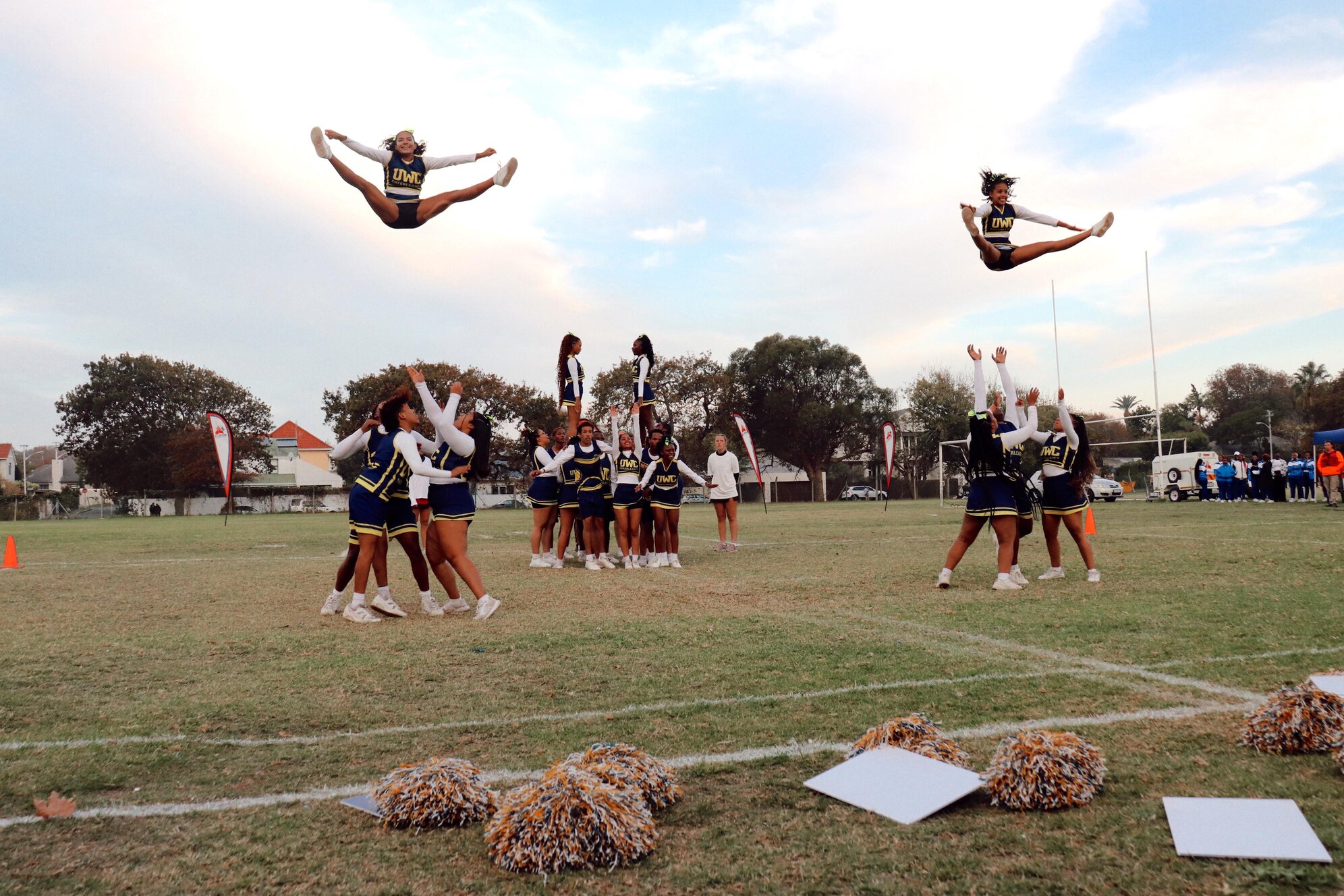
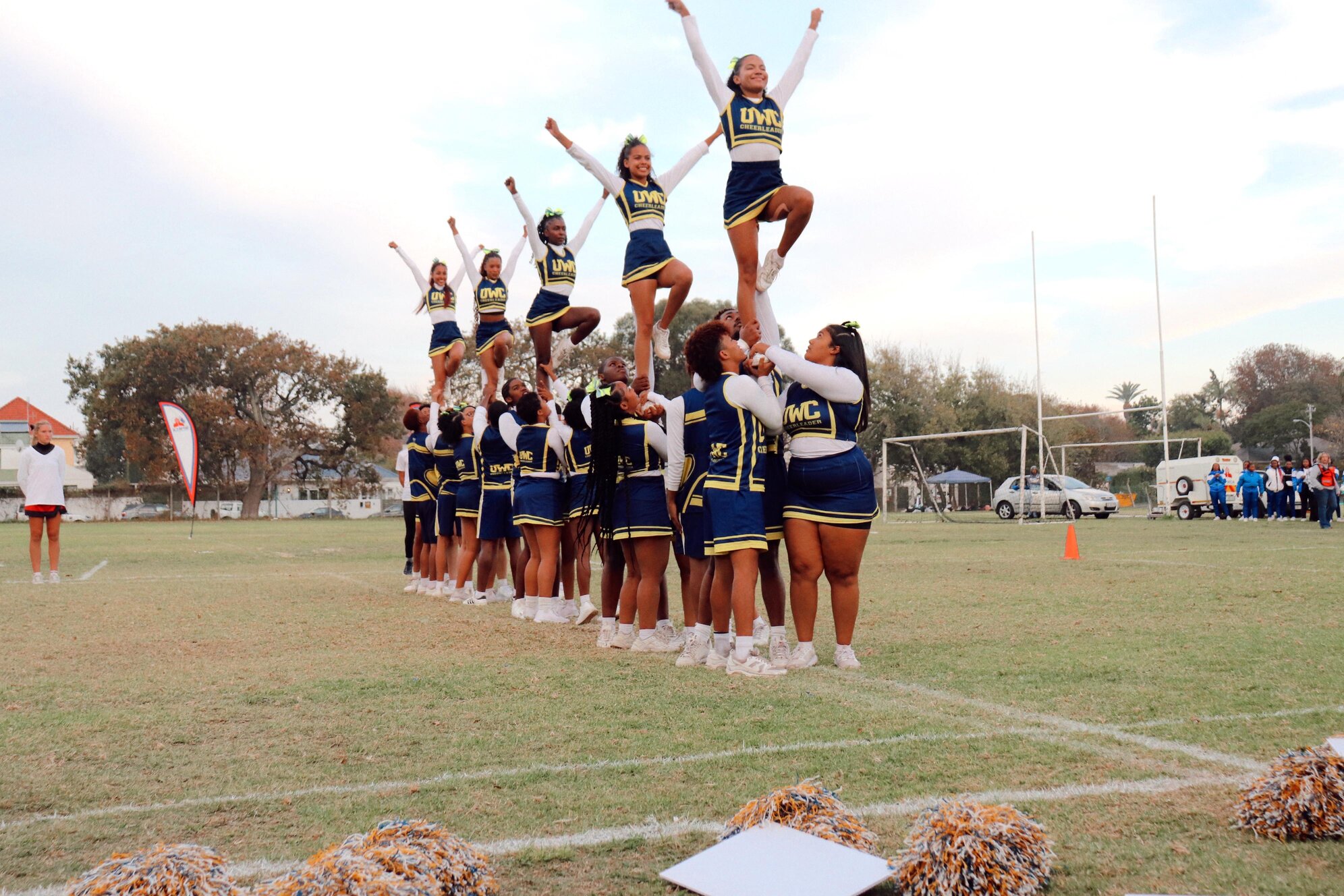
They emerged victorious in the Performance Cheerleading - Hip Hop Duo and Performance Cheerleading - Hip Hop Team categories. But their triumph didn’t stop there; they also claimed first place in their cheerleading divisions: Tertiary Small Co-Ed and Tertiary Large Co-Ed, with an all-girls team showcasing stunts, human pyramids, gymnastic skills, and dance elements that left the crowd in awe.
"As a winning team, we’re gearing up to compete at the SAMCA Nationals from 21 to 22 September,” Van Wyk said with pride.
This victory is more than just another win; it’s a powerful reminder of the team’s resilience, dedication, and indomitable spirit.
Many at UWC have seen this team light up university events, from sports matches to cultural festivals, bringing an infectious energy that makes them an integral part of the campus community.
However, the recent competition provided a platform for the UWC Cheerleading team to prove their mettle against the best in the Western Province, and they did so with unmatched determination.
“This win at the Western Province Championships is a testament to our athleticism, skill, and team spirit. I knew all along that our hard work would eventually pay off," Van Wyk reflected.
“Despite facing challenges at the third regional competition, where we had only two weeks to develop new routines and ended up with second place, we persevered and came back stronger. At the Championships, we excelled, securing first place in Small Coed, Large Coed, All-Girls Team (Participation), and Hip-Hop Duo, with third place in the Hip-Hop Team category. Our Hip-Hop division has been outstanding throughout the WPMCA season.”
From their inception, the team has grown not only in size but in reputation, showcasing athleticism and creativity that set them apart.
“Cheerleading at UWC is more than just a sport; it’s a community,” Van Wyk emphasised.
The team, composed of members from diverse backgrounds, forms a tight-knit group that supports one another both on and off the field.
Their rigorous training schedule, which includes physical conditioning, practice sessions, and team-building activities, fosters a sense of camaraderie and mutual respect that’s evident in their performances.
 Carly van Wyk
The performances were particularly noteworthy for their precision, creativity, and boundless energy.
These meticulously choreographed routines blended traditional cheerleading moves with various dance styles, creating a mesmerising spectacle for the audience.
Nadia Mgulwa, UWC Sports Administrator, highlighted the team’s broader impact: “The UWC cheerleaders have been involved in several impactful events, from supporting Mental Health Awareness Week to energising the campus at sports events. Their participation underscores their commitment to promoting well-being and fitness in the community.”
The journey of the UWC cheerleaders is a story of perseverance, passion, and unity.
Each member contributes unique strengths, whether in tumbling, stunting, or dance, while Coach Van Wyk plays a pivotal role in harnessing these talents and balancing their academic and athletic commitments.
As they look ahead, the UWC cheerleaders are poised for even greater achievements. With their recent success fueling their momentum, they are preparing for the SAMCA Nationals with renewed vigour, ready to expand their repertoire and keep their performances fresh and electrifying.
Cheerleading Facts:
1.South Africa has a National cheerleading team.
2.Cheerleading began in the late 19th century by Johnny Campbell. The first recorded cheerleading event was at a Princeton University football game in 1884. It initially involved a lot of chanting and shouting.
3.Over time, cheerleading evolved from a male-dominated activity to one primarily performed by women. Today, it combines gymnastics, dance, and acrobatics.
4.Competitive cheerleading, which includes routines with stunts, tumbling, and choreography, is a distinct sport from traditional sideline cheerleading and often involves national and international competitions.
5.Cheerleaders perform an intense workout, including strength training, flexibility exercises, and endurance training, making it a physically demanding activity.
6.Cheerleading is popular worldwide, with teams and competitions found in many countries beyond the United States, including Japan, Australia, and the UK.
7.Stunts are a key element of cheerleading routines, and safety measures are crucial. Many cheerleading organisations have strict guidelines and require proper training and certification to ensure the safety of participants.
8.Many college and professional sports teams have cheerleading squads that perform at games, lead crowd cheers, and support their teams with high-energy routines.
1.South Africa has a National cheerleading team.
2.Cheerleading began in the late 19th century by Johnny Campbell. The first recorded cheerleading event was at a Princeton University football game in 1884. It initially involved a lot of chanting and shouting.
3.Over time, cheerleading evolved from a male-dominated activity to one primarily performed by women. Today, it combines gymnastics, dance, and acrobatics.
4.Competitive cheerleading, which includes routines with stunts, tumbling, and choreography, is a distinct sport from traditional sideline cheerleading and often involves national and international competitions.
5.Cheerleaders perform an intense workout, including strength training, flexibility exercises, and endurance training, making it a physically demanding activity.
6.Cheerleading is popular worldwide, with teams and competitions found in many countries beyond the United States, including Japan, Australia, and the UK.
7.Stunts are a key element of cheerleading routines, and safety measures are crucial. Many cheerleading organisations have strict guidelines and require proper training and certification to ensure the safety of participants.
8.Many college and professional sports teams have cheerleading squads that perform at games, lead crowd cheers, and support their teams with high-energy routines.