For many decades, land disputes have been among the significant triggers of wars across Africa and around the globe, often with devastating effects. However, a ground-breaking initiative led by a University of the Western Cape (UWC) student offers hope for resolving such issues.
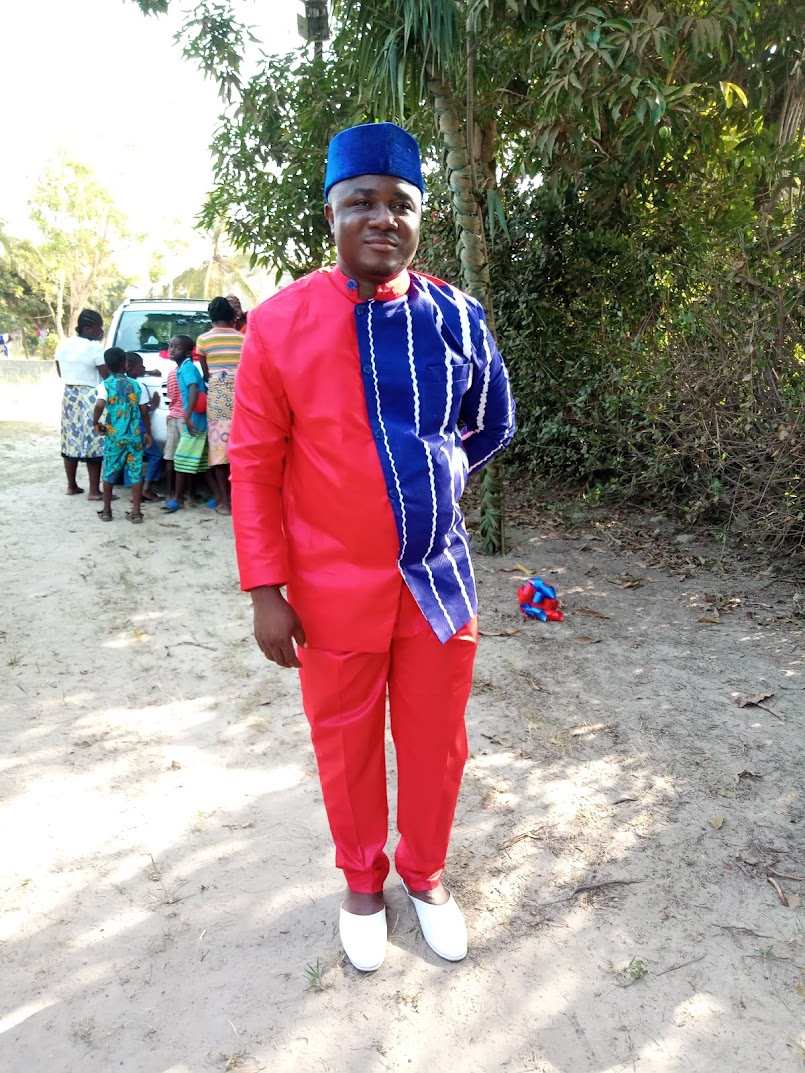
Mulabah Z. Forkpa spearheaded the design of Liberia's Land Management Activity, a project to integrate land reform with transitional justice to avert future conflicts.
"My project design approach was deeply rooted in my vision for subsidiarity, which enabled bringing land reform close to local communities while finding useful means to utilise respected customary institutions and practices," explained Forkpa, who is graduating with his LLM degree in Transnational Criminal Justice (LLM-TRANSCRIM) at the university's Autumn Graduation.
His work is aligned with UWC's goal of producing graduates who will go on to address the most complex issues in societies in South Africa and across the globe.
According to Forkpa, through this vision, they developed and strengthened the capacity of community-based organisations, opening doors to technical services close to
communities. This, he added, has proven to be an instrumental approach, and lessons are fully compiled for adaptive future learning purposes.
"Acquisition of deeds for customary Liberian communities means a lot in Liberia. Since the inception of the Liberian state in 1847, communities were not allowed to own the land on which they lived and farmed for over 100 years.
"Many communities now have deeds as proof of their land ownership. These initial gains cannot be underestimated. Community land governance bodies are now empowered to use these deeds as legal authority to control local economic development to impact the lives of community members and their unborn children."
Forkpa is managing a flagship land project for the United States Agency for International Development in Liberia, which he designed using a leadership philosophy influenced by his UWC experience.
"UWC exposed me to an impactful module in transitional justice and enabled me to examine the modalities of transitional justice processes worldwide. This helped me to explore ways to apply transitional justice reasoning to land reform. I reviewed ten countries with protracted civil wars through one of the course seminar works.”
In the case of Liberia, Forkpa saw this as a validation of the Truth and Reconciliation Commission's findings, which indicated, among others, that the poor land tenure regime was among the causes of the 14-year Liberian Civil War that started in 1989: "My studies at UWC were a significant reference point".
Forkpa acknowledges his supervisor, Professor John-Mark Iyi, and the African Center for Transnational Criminal Justice (ACTCJ), whose financial support was pivotal to his success.
Mulabah Z. Forkpa spearheaded the design of Liberia's Land Management Activity, a project to integrate land reform with transitional justice to avert future conflicts.
"My project design approach was deeply rooted in my vision for subsidiarity, which enabled bringing land reform close to local communities while finding useful means to utilise respected customary institutions and practices," explained Forkpa, who is graduating with his LLM degree in Transnational Criminal Justice (LLM-TRANSCRIM) at the university's Autumn Graduation.
His work is aligned with UWC's goal of producing graduates who will go on to address the most complex issues in societies in South Africa and across the globe.
According to Forkpa, through this vision, they developed and strengthened the capacity of community-based organisations, opening doors to technical services close to
communities. This, he added, has proven to be an instrumental approach, and lessons are fully compiled for adaptive future learning purposes.
"Acquisition of deeds for customary Liberian communities means a lot in Liberia. Since the inception of the Liberian state in 1847, communities were not allowed to own the land on which they lived and farmed for over 100 years.
"Many communities now have deeds as proof of their land ownership. These initial gains cannot be underestimated. Community land governance bodies are now empowered to use these deeds as legal authority to control local economic development to impact the lives of community members and their unborn children."
Forkpa is managing a flagship land project for the United States Agency for International Development in Liberia, which he designed using a leadership philosophy influenced by his UWC experience.
"UWC exposed me to an impactful module in transitional justice and enabled me to examine the modalities of transitional justice processes worldwide. This helped me to explore ways to apply transitional justice reasoning to land reform. I reviewed ten countries with protracted civil wars through one of the course seminar works.”
In the case of Liberia, Forkpa saw this as a validation of the Truth and Reconciliation Commission's findings, which indicated, among others, that the poor land tenure regime was among the causes of the 14-year Liberian Civil War that started in 1989: "My studies at UWC were a significant reference point".
Forkpa acknowledges his supervisor, Professor John-Mark Iyi, and the African Center for Transnational Criminal Justice (ACTCJ), whose financial support was pivotal to his success.