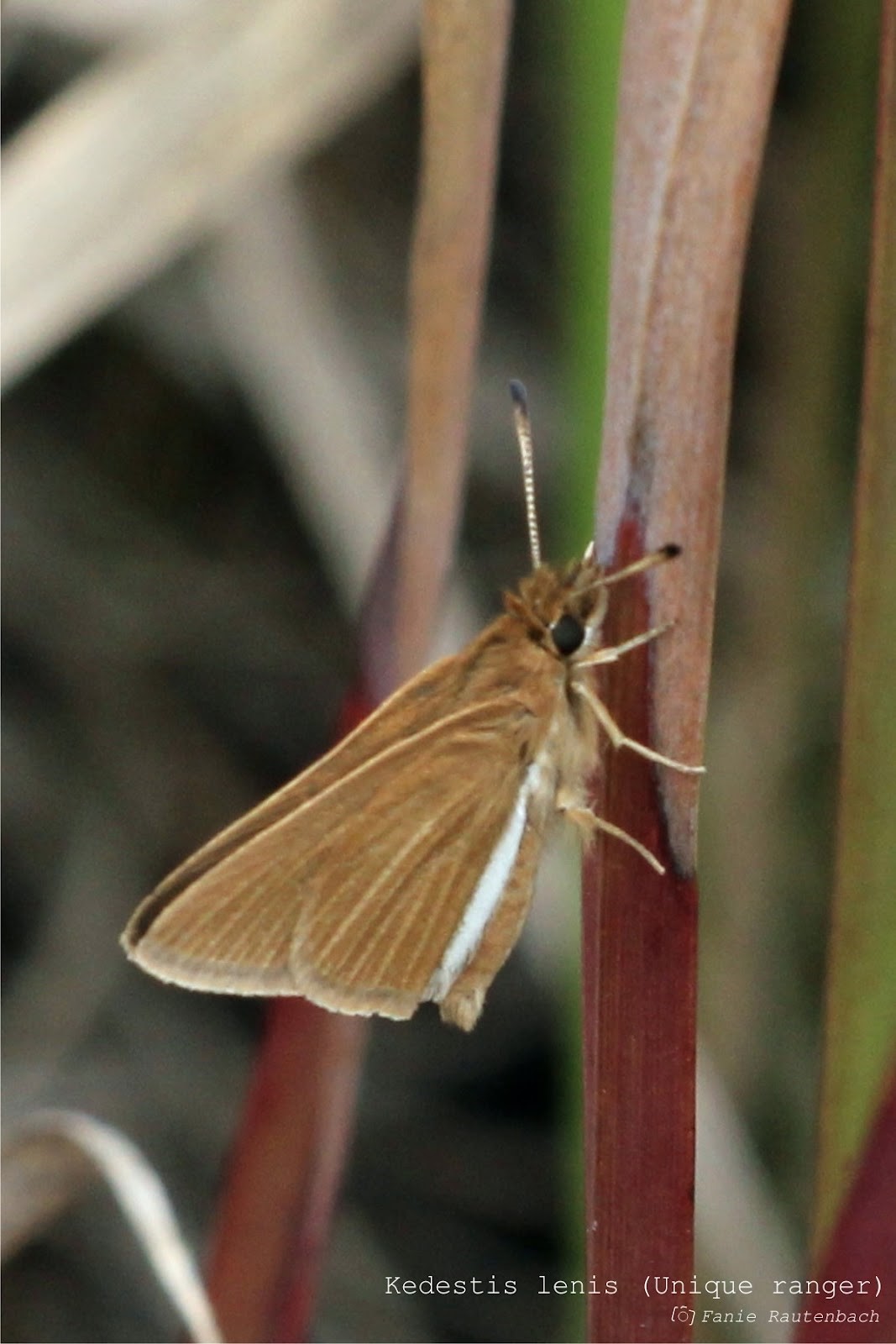
 Kedestis lenis (Unique ranger) Critically Endangered Photo: Fanie Rautenbach
The latest 2024 Biodiversity Survey of the reserve revealed an increase across multiple species categories. The current species count includes:
- 130 Birds
- 270 Flora
- 62 Fungi, Lichens, Mosses & Liverworts
- 246 Insects & Arachnids
- 27 Mammals
- 34 Reptiles & Amphibians
The reserve's biodiversity growth is particularly noteworthy given the ongoing conservation initiatives for South Africa’s fauna and flora. Rapid urbanisation, habitat destruction, and the widespread use of pesticides and herbicides continue to endanger plant and animal life. In urban areas, rodenticides pose additional threats to non-target wildlife species.
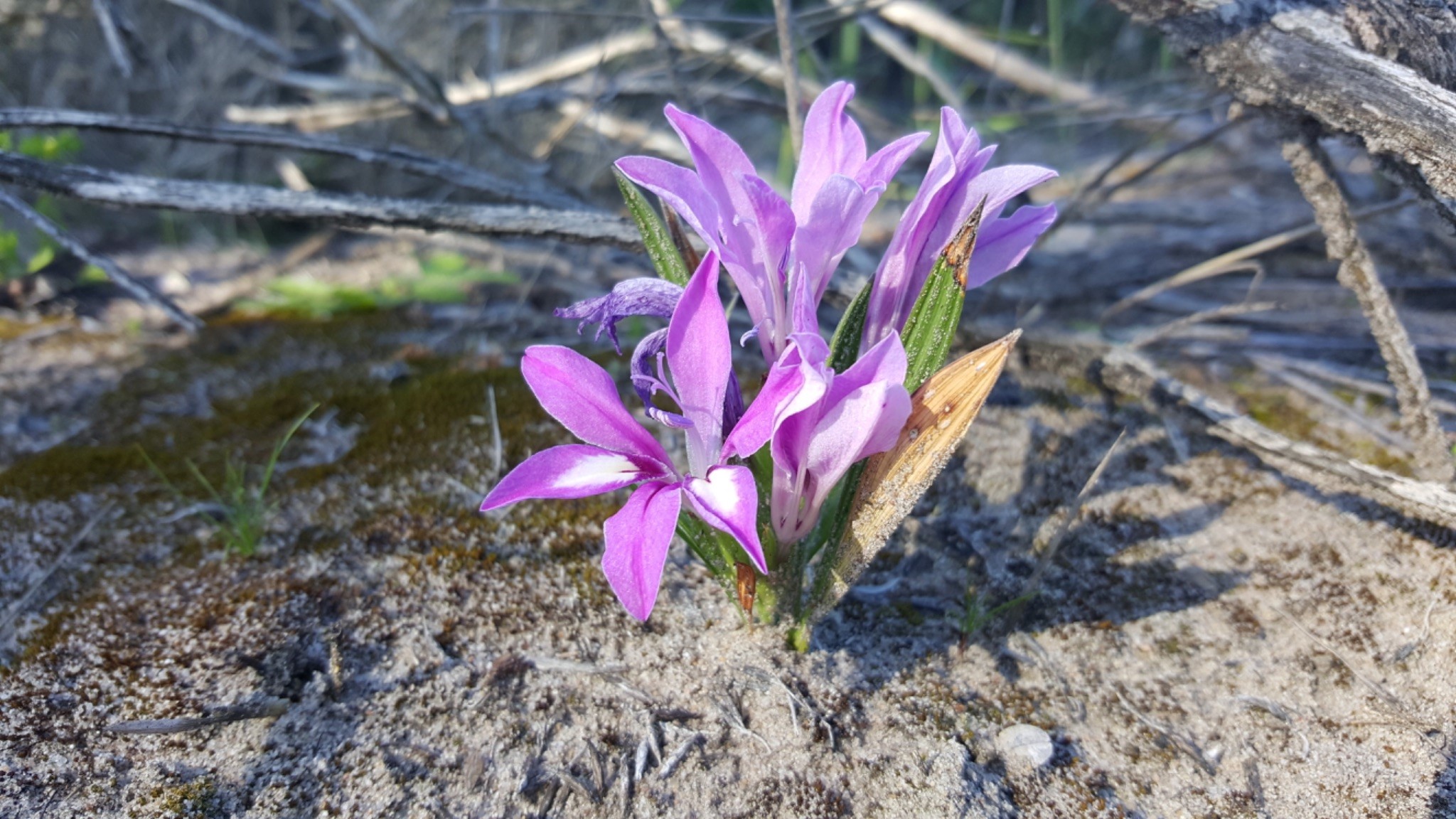 Babiana nana nana (West late bobbejaantjie) Near Threatened
Conservation initiatives, including habitat restoration, species monitoring, and public awareness campaigns, have contributed to the reserve's biodiversity gains. CFNR plays a pivotal role in sustaining and enhancing the region’s natural heritage by protecting critical habitats and curbing illegal poaching.
A little bit of history about the UWC Nature Reserve
The concept of a nature reserve on the University of the Western Cape's campus was first proposed in the early 1960s by a group of academics at UWC with a shared interest in conservation. Their vision was realised in 1977 with the official proclamation of the Cape Flats Nature Reserve under Section 12(4) of the Nature Conservation Ordinance of 1974. In 1978, the reserve was declared a National Monument, and is currently proclaimed as a Provincial Heritage site. The reserve, which covers 25% of the UWC campus, is privately owned and managed by the University.
The concept of a nature reserve on the University of the Western Cape's campus was first proposed in the early 1960s by a group of academics at UWC with a shared interest in conservation. Their vision was realised in 1977 with the official proclamation of the Cape Flats Nature Reserve under Section 12(4) of the Nature Conservation Ordinance of 1974. In 1978, the reserve was declared a National Monument, and is currently proclaimed as a Provincial Heritage site. The reserve, which covers 25% of the UWC campus, is privately owned and managed by the University.