Date: 18 September 202
Time: 18H30 - 20H30
Venue: Life Sciences Auditorium, University of the Western Cape
Queries: vbeerwinkel@uwc.ac.za
Watch the inaugural lecture HERE
The relationship between creativity and mental health issues is complex. For many artists, it remains a delicate balancing act as they navigate their careers. For Wopka Jensma, a South African poet and artist who lived during the apartheid era, this was a reality at the height of his career and artistry.
Born in 1939 in Ventersdorp, Jensma is described as an enigmatic figure whose paintings and poetry were a unique blend of social commentary on the harsh realities of apartheid and the social injustices of the 1970s and 1980s.
Professor Ayub Sheik is the Head of the Department of Language Education at the Faculty of Education at the University of the Western Cape (UWC). Throughout his academic career, he has researched Jensma's life and work.
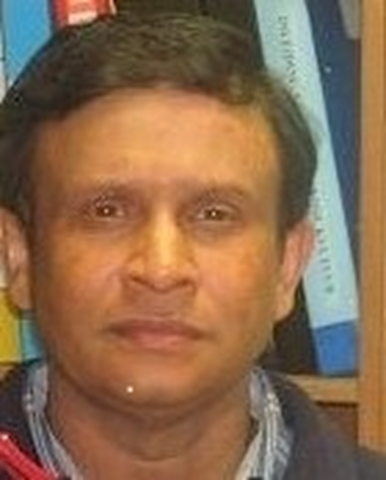
The UWC Faculty of Education presents the Inaugural Lecture of Professor Ayub Sheik on 18 September 2024
“He wasn’t only a writer and a poet; he was a graphic artist and his work reflects his deep interest in African mythology and iconography. Many of his artworks are displayed in art galleries and exhibitions across the country. Today, some of his work is in the Durban Art Gallery and in Cape Town,” said Prof Sheik.
Jensma's poetry was characterised by its unconventional style, mixing English, Afrikaans, and African languages, as well as incorporating township beats and rhythms. His work drew inspiration from avant garde movements like Dada and Surrealism, featuring surrealistic imagery and experimental typography.
Jensma’s mental health issues and the diagnosis of schizophrenia resulted in both him and his work being largely misunderstood in his lifetime, due in large part to his cryptic verse and experimental topography.
Jensma’s published anthologies, Sing for Our Execution (1973), Where White is the Colour, Where Black is the Number (1974), and I Must Show You My Clippings (1977), together with his graphic art, made him a significant precursor as an artist to South African democracy.
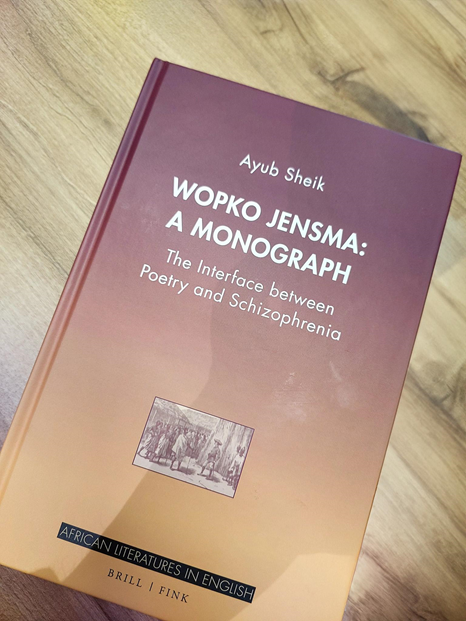 Professor Ayub Sheik’s book, Wopko Jensma: A Monograph: The Interface between Poetry and Schizophrenia, was published by Brill in June 2024 in the African Writer Series.
Prof Sheik said: “These texts constitute an original and important contribution to literary studies in South Africa. Some of his work is not easily accessible due to their cryptic and arcane nature. His bizarre cameos of racial and class oppression suggest a plea for brotherhood. For example, in one of his writings, he says, ‘be you not this thing they call white man or black man’, because he feels that these are very constructed, false representations that divide people rather than unite people.”
Despite his unconventional style and mental health struggles, Jensma's work must be celebrated for its profound insights into the oppressive society of apartheid South Africa. His ability to empathise with the oppressed and give voice to their suffering was notable, particularly for a white man during that era.
However, his work remained largely overlooked and inaccessible to many due to its experimental nature and the private and idiomatic language he used.
Prof Sheik’s book, Wopko Jensma: A Monograph: The Interface between Poetry and Schizophrenia, was published by Brill in June 2024 in the African Writer Series.